
How to Improve Ecommerce Customer Experience and Drive Growth
Improving your ecommerce customer experience isn’t about finding one silver bullet. It's about systematically polishing every single interaction a customer has with your brand to build genuine trust and lasting loyalty. The real strategy lies in creating a smooth on-site journey, a checkout process that’s completely painless, proactive communication after the sale, and truly helpful customer support. Nail these pillars, and you'll start turning one-time buyers into your biggest fans.
Why Your Ecommerce Customer Experience Is Your Greatest Asset
Let’s cut through the jargon. A great ecommerce customer experience (CX) is the engine that actually drives repeat business and builds brand loyalty. In a world where your competitors are literally one click away, the feeling a customer gets when they interact with your store is your most powerful competitive edge.
Every touchpoint matters. It all adds up—from the first ad they scroll past to the moment they're unboxing their order. A clunky website, a surprise shipping fee at the last second, or a delayed delivery notification can instantly derail an otherwise great experience. The cost of getting this wrong is just too high.
The modern consumer doesn't just buy a product; they buy an experience. If that experience is frustrating, confusing, or impersonal, they won't hesitate to leave and find a brand that treats them better.
This guide is your roadmap. We’re going to walk through a complete plan for elevating every stage of your customer's journey, giving you the practical, hands-on knowledge you need to make improvements that stick.
The Pillars of an Exceptional Customer Journey
To really move the needle on your CX, you have to look at the entire journey as a whole. Dropping the ball in one area can easily undermine all your hard work elsewhere. From my experience, it all boils down to these core pillars:
- The On-Site Journey: This is everything from how easy your site is to navigate to the quality of your product pages and, critically, how well it all works on a phone. The goal is to make it dead simple for customers to find what they need and feel confident about their purchase.
- A Streamlined Checkout: This is the final—and most treacherous—hurdle. This is where so many sales are lost. Things like guest checkout, digital wallets, and showing all costs upfront build trust and are your best weapons against cart abandonment.
- The Post-Purchase Phase: The customer’s journey doesn't stop when they click "buy." This phase is your golden opportunity to ease that "Where Is My Order?" (WISMO) anxiety with proactive shipping updates, turning a period of waiting into a positive brand interaction.
- A Helpful Support System: When things go wrong (and they will), a support team that is both fast and empathetic can turn a potential disaster into a moment that actually strengthens customer loyalty.
A major source of frustration for shoppers is poor visibility into where their package is. In fact, 29% of consumers have stopped buying from a brand simply because of a bad online experience, which is often directly tied to delivery uncertainty. This stat alone shows the massive opportunity waiting for brands that get post-purchase communication right. To get a deeper look at the strategy behind this, it's worth mastering customer experience in ecommerce.
Designing a Frictionless On-Site and Checkout Journey
Think of your website as your digital storefront. A confusing layout is the online equivalent of a cluttered, unwelcoming shop that customers can't wait to leave. To really nail the customer experience, you have to perfect the path someone takes from the second they land on your site to the moment they hit "confirm purchase." This is where you make or break the sale.
Your site navigation is basically the aisle signage of your store. If it’s clear and organized, people find what they’re looking for. If it’s not, they get frustrated and leave. The goal here isn't to be clever; it's to be instinctively clear. You want to guide people to their products with as little thought or effort on their part as possible.
Crafting High-Converting Product Pages
Once a shopper lands on a product page, that page has to do all the selling. This is your moment to answer every possible question and build that critical sense of confidence. And let's be blunt: high-quality visuals are completely non-negotiable.
A single, blurry photo won't cut it. Your customers can't touch the product, so your images and videos need to bridge that sensory gap.
- Multiple High-Res Images: Show the product from every angle imaginable. Don't forget lifestyle shots—seeing the product in a real-world context helps people picture it in their own lives.
- Zoom Functionality: Let them get up close and personal. They should be able to inspect the texture of the fabric or the finish on a piece of hardware.
- Product Videos: A quick video showing the item in action, its scale, or how to assemble it often says more than a dozen photos ever could.
Beyond the visuals, your descriptions need to pull their weight. Use scannable bullet points to hit the key benefits and specs right away. Think about the questions you'd ask—what's it made of? What are the dimensions? How do I clean it?—and answer them right there on the page.
Mastering the Mobile-First Mindset
Look, designing for desktop first and then squishing it down for mobile is a losing strategy. The vast majority of ecommerce traffic is on mobile now, which means your entire site experience has to be built for the small screen from day one. This goes way beyond just having a "responsive" theme.
A true mobile-first approach means designing for thumbs, not a mouse. Buttons need to be big enough to tap easily, text has to be readable without squinting, and menus can't be a maze. Every single step, especially the checkout, has to be seamless on a phone.
A slow or confusing mobile checkout is one of the fastest ways to kill a sale. If someone has to wrestle with tiny form fields or clunky payment pages on their phone, they're not going to stick around. They'll just give up.
Eliminating Checkout Friction
The checkout is the final hurdle, and it’s where a shocking number of sales simply die. The average cart abandonment rate is floating around 70%, and a clunky checkout is one of the biggest reasons why. Your job is to get out of the customer's way.
One of the best things you can do? Offer guest checkout. Forcing a new customer to create an account before they can hand over their money is a huge barrier. A lot of shoppers just don't want the commitment and will bounce if it's their only choice.
Next, get with the times on payments. Integrating digital wallets like Apple Pay, Google Pay, and PayPal lets people pay with a single click, skipping all the manual data entry. The easier you make it to pay, the more people will actually do it.
Finally, no surprises. The number one reason people abandon their carts is because they get hit with unexpected costs. Be completely transparent about shipping fees, taxes, and anything else upfront. Show these costs on the product page or in the cart itself—not just on the final payment screen. Trust is everything, and a smooth, surprise-free checkout is how you earn it.
Turning Post-Purchase Into a Loyalty-Building Machine
That moment a customer clicks "buy" isn't the end of the sale; it's the beginning of the next one. This post-purchase phase is a goldmine for building real, lasting customer relationships, but it's an area far too many brands neglect. It’s your chance to turn a period of anxious waiting into an engaging and reassuring experience, transforming a simple transaction into the foundation for future loyalty.
The biggest source of friction here is the dreaded "Where Is My Order?" (WISMO) question. This single inquiry clogs up support channels and creates a negative, anxiety-ridden experience for your customer. The root of the problem? Usually, it's a fragmented and confusing tracking process that sends customers off to third-party courier sites filled with jargon and inconsistent updates.
To truly fix this, you have to own the conversation.
Taking Control With Unified Parcel Tracking
Instead of outsourcing this critical touchpoint to various couriers, a unified parcel tracking solution brings the entire experience back under your brand's roof. This means consolidating updates from all your shipping partners—FedEx, USPS, DHL, and anyone else you use—into a single, clean, branded interface.
When a customer wants to check their order status, they return to your website, not a confusing carrier page. This simple change keeps them within your ecosystem, reinforces your brand identity, and lets you control the narrative. You've just turned a moment of potential anxiety into another positive brand interaction.
For small sellers and dropshippers, this approach has a massive impact. It can slash support ticket volume by up to 30% year-over-year by giving customers the self-service tools they actually want. A key metric, first-contact resolution, averages 68% across the industry, but brands that master transparent tracking often push that figure above 80%. The real-world results are clear: businesses using unified tracking have seen their customer satisfaction (CSAT) scores climb from an average of 3.8 to a much healthier 4.4 out of 5.
Proactive Communication Is Your Best Friend
The secret to a stellar post-purchase experience is getting ahead of the questions. Don't wait for the customer to ask for an update; give it to them before they even think to look. Automated email and SMS notifications at key delivery milestones are non-negotiable in today's market.
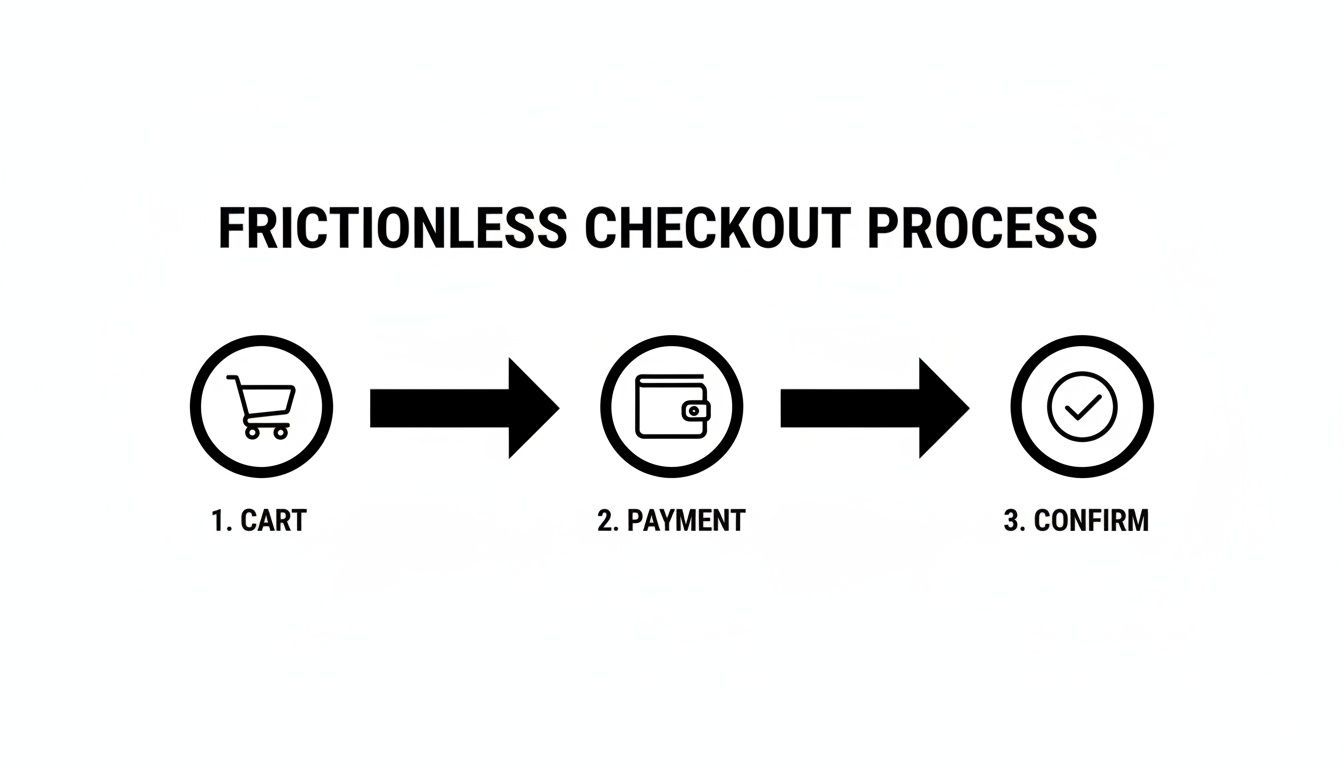
Think beyond the standard "Your order has shipped" message. A truly effective communication strategy includes updates for several key moments:
- Order Confirmed: Instantly reassures the customer their payment went through and you're on the job.
- Item Shipped: Kicks off the excitement, complete with a link to your branded tracking page.
- In Transit: A simple update letting them know the package is moving through the network.
- Out for Delivery: The most anticipated message, building excitement for the package's arrival that day.
- Delivered: The final confirmation that closes the loop. This is also your golden opportunity to ask for a review or offer a discount on their next purchase.
Each of these messages should be concise, helpful, and infused with your brand's voice. They aren't just transactional updates; they are mini-conversations that show you care. If you want to dive deeper, our guide breaks down the specifics of what is delivery confirmation and why it’s such a critical touchpoint.
By proactively managing expectations and keeping customers in the loop, you don't just reduce support tickets—you build trust. A customer who feels cared for after they've already paid is far more likely to become a repeat buyer.
Crafting the Perfect Notification Messages
The content of your notifications really matters. Stuffy, robotic messages do nothing to build a relationship. Below is a sample communication plan and a few templates you can adapt to fit your brand's unique personality.
Proactive Post-Purchase Communication Plan
This table outlines a simple but effective plan for sending automated, informative updates at key stages of the delivery process. The goal is to reduce customer anxiety and preempt WISMO queries.
| Delivery Stage | Communication Trigger | Key Information to Include | Example Message (SMS/Email) |
|---|---|---|---|
| Shipped | Label created by carrier | Order #, branded tracking link, estimated delivery window | "Great news! Your [Brand] order #[Order Number] is on its way. Track it here: [Link]" |
| Out for Delivery | Carrier scan indicates "Out for Delivery" | Confirmation of today's delivery, updated tracking link | "Get ready! Your order is out for delivery today. We're as excited as you are! [Link]" |
| Delivery Attempt | Carrier scan indicates a failed attempt | Reason for failure, next steps, link to reschedule/carrier contact | "Heads up: An attempt was made to deliver your order #[Order Number] today. Here's what to do next: [Link]" |
| Delivered | Carrier scan confirms delivery | Confirmation of delivery, photo (if available), link to leave a review | "It's here! Your package has been delivered. We hope you love it! Let us know what you think: [Review Link]" |
By setting up this sequence, you’re creating a reassuring, hands-on experience without lifting a finger for each order.
Example SMS Templates
- Order Shipped: "Great news, [Customer Name]! Your order #[Order Number] from [Your Brand] is officially on its way. Track its journey here: [Branded Tracking Link]"
- Out for Delivery: "It's the best day! Your [Your Brand] order is out for delivery. Keep an eye out! [Branded Tracking Link]"
Example Email Template (Delivered)
- Subject: It's Arrived! Your [Your Brand] Order Has Been Delivered!
- Body:
Hi [Customer Name],
Great news—your order #[Order Number] has just been delivered!
We can't wait for you to unbox your new [Product Name(s)]. We hope you love it as much as we do.
Once you've had a chance to check it out, we'd be so grateful if you could share your thoughts.
[Leave a Review Button]
Thanks again for choosing us,
The Team at [Your Brand]
This proactive strategy does more than just keep customers happy; it directly boosts your bottom line. A positive post-purchase experience is a massive driver of repeat business. For a detailed guide on keeping customers coming back, check out this playbook on how to improve customer retention. By turning the delivery process into an extension of your brand, you create a powerful cycle of satisfaction and loyalty that pays dividends long after the package arrives.
Weaving Personalization Into the Customer Journey to Build Real Connections
Let's be honest, today's shoppers are looking for more than just a transaction. They want to feel a connection. They expect the brands they love to remember who they are and what they like, and that’s where personalization comes in.
This isn't about some creepy algorithm targeting them. It’s about using what you know to create a genuinely better, more helpful shopping experience. Get this right, and you'll turn one-time buyers into people who rave about your brand.
Think Beyond "You Might Also Like"
Real personalization runs much deeper than just showing a few related products at the bottom of a page. It means tailoring the entire experience—from the marketing emails they get to the content on your homepage—based on their unique history with you.
A customer who always buys hiking gear shouldn't get a generic "20% off" email. Imagine instead they get a heads-up about new waterproof jackets right before the rainy season starts in their area. That's a connection. That's relevance.
The numbers back this up. An overwhelming 91% of consumers say they’re more likely to shop with brands that send them relevant offers. On the flip side, 71% get frustrated when the experience feels totally impersonal. The payoff is huge, too: over 60% of shoppers become repeat customers after a personalized experience. You can dig into more of the data in this report on e-commerce trends.
Where to Weave in Personalization
A smart personalization strategy isn't a single action; it's a thread you pull through the entire customer journey. Here are a few places you can start making a real impact.
- Tailor your on-site content: Your website shouldn't be one-size-fits-all. If someone has been browsing men's running shoes, why is your homepage banner promoting women's dresses? Use their history to show them what they actually want to see.
- Segment your marketing campaigns: Stop the email blasts. Seriously. Group your audience by what they've bought, how loyal they are, or even where they live. This lets you send hyper-relevant offers that people will actually open.
- Get proactive with post-purchase updates: This is a golden opportunity that most brands completely miss. Use the customer's specific order data to give them incredibly helpful updates.
Think about someone who ordered internationally. "Your order is in transit" is okay, I guess. But a proactive message like, "Good news! Your package just cleared customs and is with the local delivery service" is a world-class touch. It shows you're sweating the details of their order, turning a moment of anxiety into one of genuine relief.
Use Order History to Communicate Smarter
Your customers' purchase history is a treasure trove. It tells you exactly what they like, how often they buy, and what they'll probably need next.
When you plug this data into your communication tools, you can automate messages that feel personal and build a real emotional connection.
Here’s what this looks like in the real world:
- Replenishment Reminders: Did a customer buy a 30-day supply of coffee beans? Hit them with a friendly email or text around day 25 asking if they're running low. It’s helpful, not pushy.
- Cross-Sell Smartly: Someone just bought a new camera? Don't just sit back. A week later, send a curated email showing them the best lenses and camera bags that work with their specific model.
- Recognize Your VIPs: After a customer makes their tenth purchase, send them an exclusive offer with a personal note thanking them for their loyalty. Make them feel seen.
This kind of communication proves you understand their journey. It's how you deliver value long after the first sale and give them every reason to shop with you again.
Build a Support System That’s Both Smart and Human
Fantastic customer support isn't about just closing tickets. It’s about proving to your customers that you’ve got their back. When something goes sideways, that single interaction can either shatter their trust or transform them into a lifelong advocate for your brand.
The real magic happens when you blend smart, efficient technology with a genuine human touch. The goal is to equip your team with tools that let them solve problems fast, so they can focus on the person, not just the ticket number.
Arm Your Team With Instant Answers
Nothing kills a support agent's momentum faster than not having the right information. When a customer inevitably asks, "Where is my order?", the last thing you want is your agent fumbling through five different carrier websites and internal dashboards. That delay is frustrating for everyone.
This is exactly where a centralized tracking platform becomes your team's secret weapon. Giving them a single dashboard with a complete, real-time view of any order's status is a total game-changer. They can see the entire delivery journey at a glance and resolve a WISMO inquiry in seconds. This directly boosts your first-contact resolution rate, a metric that truly defines support effectiveness.
When your team has answers at their fingertips, they stop being information hunters and become genuine problem solvers. That single shift is what separates a forgettable, transactional interaction from a memorable brand experience.
Equipping your team this way shows you respect their time and the customer's. A confident, empowered agent is far better prepared to handle tricky situations with the empathy they deserve.
Champion Self-Service and Customer Empowerment
Let's be honest: a lot of customers would rather find an answer themselves than start a conversation. A top-tier support system recognizes this and empowers them to do just that. Providing clear, accessible self-service options is a huge win-win. Customers get the instant gratification they crave, and your support team is freed up to tackle the more complex, high-touch issues.
A comprehensive, well-organized FAQ page is your foundation. But don't just phone it in.
- Anticipate the real questions: Go beyond the obvious. Dig into every possible query about shipping, returns, product care, and sizing.
- Speak their language: Ditch the corporate jargon. Write your answers from the customer's point of view.
- Make it searchable: If you have more than a handful of articles, a search bar isn't a feature; it's a necessity.
Customers today expect speed. In fact, 72% of customers expect immediate service when they reach out. Giving them self-service tools for common requests like order tracking can slash your support volume by up to 30% year-over-year. You can explore the research on ecommerce customer service demands to see just how critical this is.
Handle Returns and Hiccups with Grace
No one loves returns, but how you handle them says everything about your brand. A clunky, confusing returns process can poison a customer relationship for good. On the flip side, making it dead simple can actually build loyalty, even when the purchase wasn't a perfect fit.
Your returns policy should be easy to find and even easier to understand. Offer a pre-paid return label and a clear, step-by-step process to remove friction. This simple act shows you value the customer's experience above all else.
The same grace should apply to shipping issues. When a customer calls about a delay, the first response should always be empathy and ownership. Even if a rare issue like a shipment exception occurs, a proactive and helpful response can turn a negative into a positive.
A support system that marries powerful tools, smart self-service, and a human-first approach to problems is non-negotiable for an exceptional customer experience. It’s an investment that pays dividends in loyalty, positive word-of-mouth, and a brand people genuinely want to support.
Frequently Asked Questions About Improving Ecommerce CX
When you start digging into how to improve your ecommerce customer experience, a lot of questions pop up. That's completely normal. You're trying to figure out where to put your time and money to get the best results. Let's walk through some of the most common things I hear from store owners.
The first question is almost always about money: "How can I afford all of this?" The great news is you don't need an enterprise-level budget to make a real difference. Many of the best tools have pricing that grows with you. The trick is to be smart about your priorities.
Instead of trying to boil the ocean and fix everything at once, find the biggest point of friction in your current customer journey. For most online stores, that's the anxiety that kicks in right after they click "buy." Something as simple as a branded, easy-to-use tracking solution can deliver the single biggest win for customer happiness without a massive price tag.
Where Do I Even Start?
It’s easy to feel overwhelmed. When you’re short on time and resources, the key is to pinpoint the changes that give you the most bang for your buck. I always tell people to start with their communication.
Before you even think about complex personalization engines, take a hard look at the automated messages you're already sending. Are your order confirmation emails actually clear? Do your shipping updates provide real value, or are they just generic carrier-speak?
- Review Your Automated Emails: Go through every single transactional email, from order confirmation to delivery. Make sure each one is on-brand, easy to understand, and genuinely helpful.
- Be Proactive with Alerts: At a bare minimum, you should be sending notifications when an order is shipped, out for delivery, and successfully delivered. This is non-negotiable.
- Create a Central Tracking Hub: Give customers one simple tracking page on your website. This tiny change prevents them from getting frustrated on confusing carrier sites and keeps them in your ecosystem.
Taking these steps first can slash the number of "Where Is My Order?" (WISMO) tickets that swamp your support team. To really get it right, it helps to understand what a tracking number represents from your customer's point of view.
How Do I Measure the ROI on This?
You have to be able to measure the return on your customer experience efforts. Otherwise, you're just guessing. Vague goals like "improving satisfaction" don't cut it. You need to connect your actions to real business numbers.
A better customer experience isn't a "nice to have"—it's a revenue driver. It directly increases customer lifetime value (LTV) by building trust and encouraging people to buy from you again and again.
Track your key performance indicators (KPIs) before and after you make a change. For instance, if you roll out a new unified tracking page, keep a close eye on these metrics:
- A Drop in WISMO Tickets: This is the most immediate and direct measure of success. You should be aiming for at least a 20-30% decrease in "where is my order?" questions.
- An Increase in Repeat Purchase Rate: Happy, informed customers come back. Watch this metric over the next 3-6 months to see the long-term impact.
- Higher CSAT Scores: If you send out post-purchase surveys, look for a measurable lift in your Customer Satisfaction scores.
When you focus on concrete numbers like these, you can easily prove the value of your CX work and justify where you invest your resources next.