
Your Guide to the Best Overnight Tracking Experience
When you're trying to get the best overnight tracking experience, your best bet is a universal tracking aggregator like Instant Parcels. These tools pull all the data from carriers like UPS, FedEx, and USPS into a single, easy-to-read dashboard. It’s a game-changer because you stop bouncing between different websites, giving both you and your customer one clear source of truth for those time-sensitive shipments.
Why Flawless Overnight Tracking Is Non-Negotiable
In the world we live in now, next-day delivery isn't a luxury anymore—it's the standard. For any business, just one delayed overnight package can throw a wrench in the entire supply chain, pause a critical project, or instantly damage a customer's trust. And for the person waiting on that package? The anxiety is real, especially if it’s something important like medicine, a passport, or a last-minute gift.
The stakes are just too high for guesswork. This pressure means that visibility into a package's journey is absolutely essential. Customers don't just want a tracking number; they expect to see their package moving in real time, with accurate updates that make sense.
Moving Beyond a Fragmented System
Let’s be honest, the old way of tracking is a pain. You have a FedEx number, a UPS number, and a USPS number, and you’re constantly switching between browser tabs to check them all. Each carrier has its own lingo and updates on a different schedule, which just adds to the confusion. This is a massive headache, particularly for e-commerce sellers trying to manage orders shipped with different partners.
This is where a tracking aggregator comes in. It acts as a unified command center, eliminating the need to juggle multiple websites. Instead, you get one clean dashboard that gives you everything you need.
Carrier Auto-Detection: Just paste in any tracking number, and the system figures out who the carrier is. No more guessing games.
Standardized Statuses: It translates confusing carrier-specific terms like "In Transit - Arrived at Sort Facility" into plain English.
Complete Visibility: You can see the package's entire journey, from the moment the label is created to the final delivery confirmation, all in one place.
Reduced Anxiety: When both you and your customer have a single, reliable place to check for updates, it builds trust and provides much-needed peace of mind.
The overnight delivery service market is a massive piece of the global logistics puzzle, valued at roughly $350 billion annually as of 2025. As overnight shipping went from a nice-to-have to an absolute must, top-tier tracking became the price of entry for staying competitive.
By pulling all your tracking data into one place, a universal tool turns a chaotic, stressful process into something you can actually manage. It puts you in control, letting you proactively monitor your most urgent shipments and deliver the best overnight tracking experience possible.
At the end of the day, a seamless tracking process is a fundamental part of a great customer experience. For more on this, check out our guide on https://instantparcels.com/how-to-improve-ecommerce-customer-experience to learn other ways you can build loyalty.
Preparing Your Shipment for a Perfect Delivery
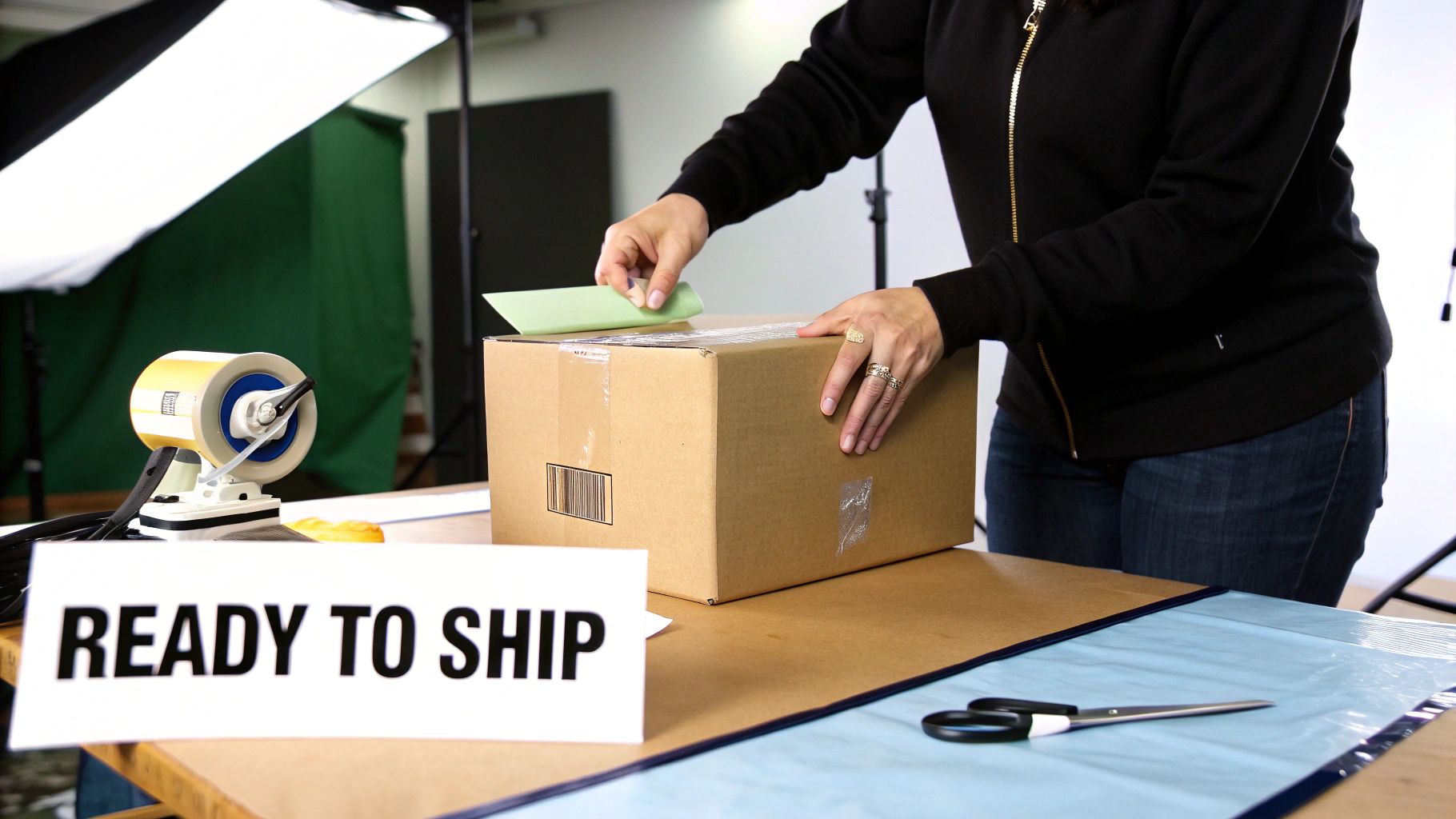
A great overnight tracking experience actually starts before the package even leaves your hands. Believe it or not, most delivery disasters don't come from some massive logistical meltdown. They happen because of small, simple mistakes made during prep. Nailing these details is your first, best defense against a failed delivery.
The physical durability of your package is everything. Don't just repurpose an old box from your last online order. Grab a new, sturdy corrugated box that can take a beating on high-speed sorting belts. If you're shipping anything fragile, make sure you've got at least two inches of cushioning on every side and pack it tight—you don't want the contents rattling around in there.
Your Shipping Label is Mission Control
Think of the shipping label as the package's brain. If it can't be read, your shipment is dead in the water. A smudged barcode or a torn address can stop its journey cold, leading to a delay that was entirely preventable.
Protect the Label: A clear plastic pouch is best, but at a minimum, cover the whole label with clear packing tape. This is your shield against rain, smudges, and rips.
Ensure Scan Quality: Use a decent printer. A faded, low-resolution barcode is one of the top reasons packages get mis-sorted by automated systems.
Accurate Dimensions: Don't guess the weight and size. Carriers use laser scanners to measure everything, and if your numbers don't match, you're looking at extra fees and potential holds. Always measure and weigh your package after it’s fully sealed and ready to go.
Beyond just tracking, a solid understanding shipping and delivery processes gives you a huge advantage. It helps you think like a carrier and sidestep the usual hang-ups.
Remember this: The journey from your hands to the destination is a race against time. A poorly prepared package is like a runner starting with their shoes untied—it's destined to stumble.
Master the Carrier Cutoff Times
Finally, you have to play by the carrier's clock. Every overnight service has a hard cutoff time. Miss it by five minutes, and your "overnight" shipment is already a day late before it's even been scanned. It’ll just sit there until the next business day.
For example, a service like FedEx First Overnight will have a much earlier cutoff time than their Standard Overnight option. Always double-check the exact deadline for the specific service you're using at your local drop-off point. A quick search for "FedEx drop-off locations near me" will show you the hours and, crucially, their last pickup times. Hitting that deadline is the last piece of the puzzle for a smooth, on-time delivery.
Get a Bird's-Eye View of Every Shipment in Real-Time
If you’ve ever tried to track five urgent overnight packages from three different carriers at once, you know the feeling. It’s a logistical headache—a chaotic scramble of browser tabs, with one for FedEx, another for UPS, and a third for USPS. Each has its own weird jargon, and trying to keep them all straight is a recipe for disaster. You're almost guaranteed to miss a critical update.
This is where a universal tracking tool becomes your best friend. Instead of juggling websites, you get a single source of truth. With an aggregator like Instant Parcels, you just copy and paste any tracking number into one search bar. The system is smart enough to figure out the carrier and instantly pulls up the package’s entire journey, laid out chronologically. This is the secret to the best overnight tracking—it turns a frantic, messy task into a simple, controlled process.
One Dashboard to See It All
Let's paint a picture. You're an e-commerce seller slammed during a holiday rush. You've got a customer who desperately needs a replacement part sent via UPS Next Day Air. Another order is a fragile, high-value gift shipped with FedEx Priority Overnight. And a third is a critical document sent through USPS Priority Mail Express.
Instead of bouncing between three different tracking pages, imagine seeing them all in one clean, simple interface. This centralized view isn't just a nice-to-have; it's a game-changer.
No More Carrier Jargon: A good aggregator translates confusing carrier-specific terms into plain English. "Departed Sort Facility" becomes a clear, consistent update you can actually understand, no matter the carrier.
Massive Time Savings: Forget copying and pasting tracking numbers into a dozen different websites. You get a complete picture of all your shipments in seconds.
Spot Problems Before They Happen: When you can see all your urgent shipments side-by-side, you can spot potential delays much faster. Is one package stuck at a hub while the others are moving? You'll know right away.
In a world that moves billions of packages, this unified approach is non-negotiable. The global parcel delivery logistics market was valued at $520.59 billion in 2025, with online retail alone responsible for 131 billion parcels. You simply can't manage your slice of that pie effectively without a single point of control.
A single dashboard turns you from a reactive package-checker into a proactive logistics manager. You’re no longer just watching; you’re overseeing the entire delivery process from a command center.
From Chaos to Clarity
To really appreciate real-time visibility, you have to understand the technology that makes it possible. Everything hinges on that barcode. Services that provide professional barcoding services are the unsung heroes here, as every scan of that label is what feeds the data stream you see on your screen. When you use a universal tool, it pulls in every single one of those scans from every carrier and organizes it for you.
This is what allows you to "pin" or save your most important shipments. That time-sensitive contract for a new client? You can favorite it for quick access, making sure it never gets lost in the shuffle of less critical orders. It's a simple feature, but it removes the mental clutter of trying to remember which tracking number belongs to which package, giving you the clarity to focus on what really matters.
For a deeper look at the tools that make this possible, check out our guide on the best package tracking app.
How to Handle Common Delays and Status Glitches
Even with the best tracking in the world, your stomach sinks when you see a time-sensitive overnight shipment grind to a halt. It’s a stressful moment, but a delay doesn’t have to spiral into a full-blown crisis. If you know how to read the signs, you can shift from panic to proactive problem-solving.
When a confusing status pops up, the first step is to figure out what it really means. A "clearance delay," for example, almost always points to an international shipment. It means customs officials are taking a closer look at the package or its paperwork. Your best bet is to dig into the detailed tracking history for any notes about missing documents and then get the carrier on the phone with your tracking number handy.
Another one I see all the time is a "delivery exception" or "delivery attempt failed." It sounds alarming, but the cause is often simple. Maybe the driver couldn't get into the building, or a detail in the address was off. Check the tracking notes for specifics—if it’s an address issue, call the carrier’s customer service immediately to get it corrected.
Carrier Faults vs. External Factors
It’s also really important to know the difference between a carrier-controlled issue and an external one. A mechanical failure on a delivery truck? That's on the carrier, and you might even be eligible for a service guarantee refund. But a massive snowstorm that grounds every flight in the region is an external factor, and those guarantees usually get suspended.
Understanding this distinction helps you manage expectations for both yourself and your customer. When it’s an external delay, the best you can do is practice patience and communicate clearly. Let the recipient know you’re watching the situation and will pass along updates as soon as you have them.
For a deeper dive, we have a complete guide that explains exactly what to do when you get a shipment exception.
This decision tree gives you a good visual for how to approach tracking from the get-go, whether you have a single number or need a bird's-eye view of all your shipments.
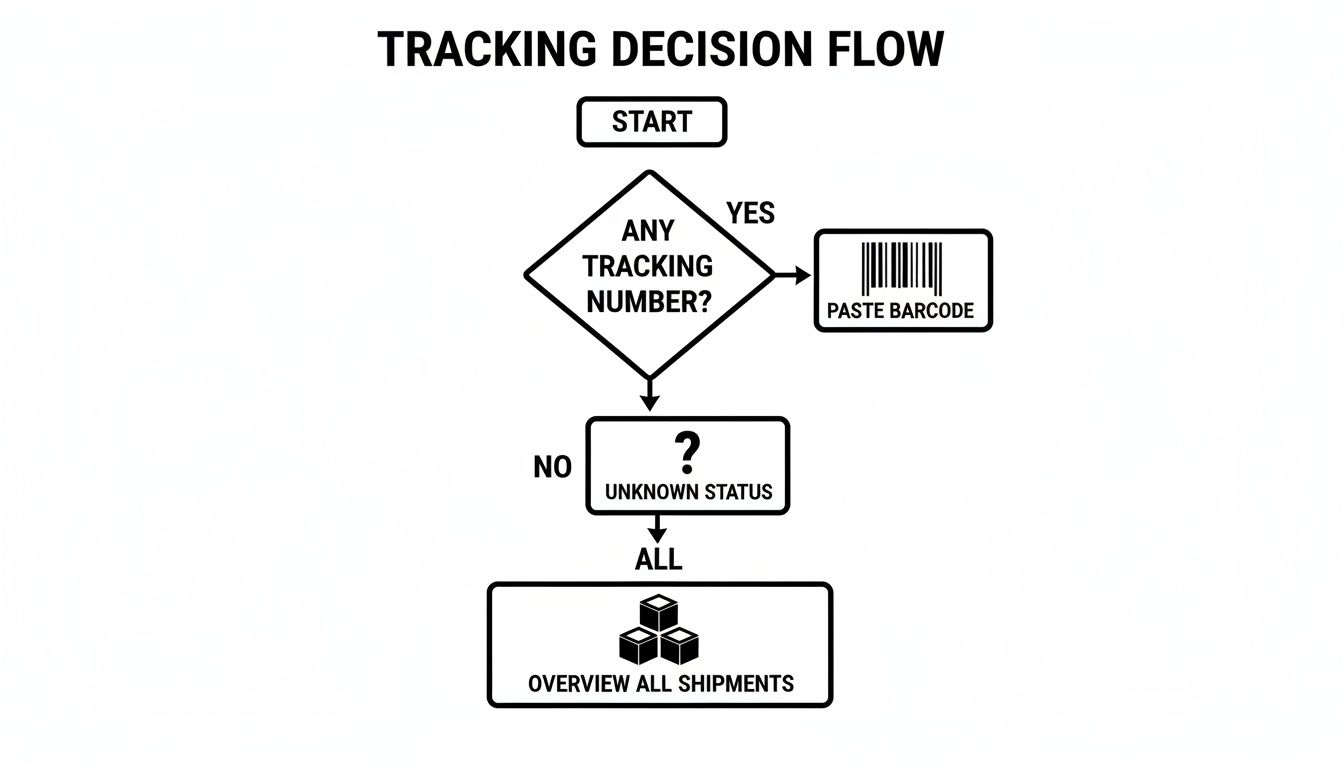
As you can see, the right action depends on what information you have, leading you to the most efficient way to track your package.
Proactive Troubleshooting Steps
Don't just sit and wait for a problem to get worse. If you notice an overnight shipment hasn't had a tracking update in over 12 hours, it's time to take action.
Get the Carrier on the Phone: Call their support line with your tracking number. Ask them to run an "internal trace" on the package—this gives them access to far more detail than you can see on the public tracking page.
Verify the Shipping Details: Go back and double-check the recipient's address and contact info against what’s on the shipping label. You’d be surprised how often a simple typo can bring everything to a standstill.
Use Your Aggregator as a Command Center: A platform like Instant Parcels is your best friend here. Keep the tracking page open so you can catch the very next scan and see the moment that package starts moving again.
While delays are frustrating, it’s good to remember they are the exception, not the rule. During the 2025 peak holiday season, major carriers posted impressive on-time delivery rates, with UPS at 97.2%, FedEx at 95.3%, and USPS at 94.1%. These are strong numbers, and they show that real-time tracking data is generally a reliable tool for quickly spotting the rare packages that actually run into trouble.
The key takeaway? Treat tracking glitches as signals to act, not reasons to panic. With the right information and a clear plan, you can resolve most issues quickly and keep your shipment moving.
Proactive Communication: The Secret Weapon for Sellers and Support Teams
Great customer service isn't about waiting for the phone to ring with a problem—it’s about getting ahead of issues before they even start. For anyone selling online, the real test of your brand happens after the customer clicks "buy." This is where you build loyalty.
Shifting from a reactive "we'll fix it when it breaks" mindset to a proactive communication strategy can completely change the game. It calms customer nerves and dramatically cuts down on those dreaded "Where is my order?" tickets.
The single best thing you can do? Share a universal tracking link the second that label is printed. Don't just email a string of numbers. Give them a direct, clean link to a tracking page, like the one Instant Parcels generates, so they have one-click access to all the information they need. You're empowering them from the get-go.
Put Your Customer Updates on Autopilot
Keeping customers in the loop doesn't mean your team has to be glued to their keyboards sending manual updates. A few well-timed, automated messages can turn a stressful waiting period into a positive, confident experience.
Set up automated emails or SMS messages triggered by the most important tracking events. These little nudges show you’re on top of their order and you care.
When it ships: "Good news! Your order is on its way. You can follow its journey right here: [Universal Tracking Link]."
The day it's arriving: "Get ready! Your package is on the truck for delivery today."
Once it's delivered: "It's arrived! Your order was just delivered. We hope you love it!"
These alerts do more than just relay facts. They build trust and manage expectations, which is absolutely critical when someone is counting on an overnight delivery.
Proactive communication turns the customer experience from a passive waiting game into an engaging, transparent process. It tells your customer, "We're in this with you, every step of the way."
Turning Delays into Loyalty-Building Moments
The real measure of your customer service is how you handle things when they go sideways. A delay is inevitable now and then. But instead of waiting for an angry customer to reach out, a proactive approach lets your team swoop in and be the hero.
By setting up internal alerts for stalled or delayed shipments, your support staff can spot a problem before the customer even knows there is one.
Let's say a package gets stuck at a hub. Your internal system flags it. Your support agent can immediately contact the carrier to find out what's going on and then send the customer a quick email.
Something like this works wonders: "Hi [Name], we noticed a slight delay with your shipment and wanted to let you know. We've already reached out to the carrier to get it moving and will keep you posted. We're sorry for the hiccup and really appreciate your patience."
This simple act completely flips the script. You're not making excuses; you're owning the solution. You show your customers you're reliable, and you can turn a potential one-star review into a story they'll tell about your amazing service.
Got Questions About Overnight Tracking? We've Got Answers.
When a critical package is in transit, questions and a bit of anxiety are completely normal. Under the gun, trying to figure out carrier policies or what a weird tracking status means is the last thing you need. Let’s clear up some of the most common issues people run into when tracking an overnight delivery.
What Do I Do If My Guaranteed Overnight Package Is Late?
This is a big one. If your package has a money-back guarantee and it’s late due to a carrier slip-up—think a sorting error or a truck breakdown—you're almost always entitled to a full refund on your shipping costs.
First, check the tracking details. You want to make sure the delay wasn't caused by something outside the carrier's control, like a major blizzard or an incorrect address you provided. Those situations, unfortunately, aren't covered by the guarantee.
If the fault lies with the carrier, head to their website and look for their money-back guarantee page to file a claim. You'll need the tracking number. The key here is to act fast. Most carriers, including both UPS and FedEx, give you a tight window—usually just 15 days from the original delivery date—to get your claim in.
Why Has My Tracking Gone Silent for Hours?
It's easy to start worrying when you see your overnight shipment's tracking status just freeze. But a temporary pause in updates is usually nothing to panic about.
Think about it this way: a package isn't scanned continuously. It gets scanned at key checkpoints. If it's on a cross-country flight or a long-haul truck between two major sorting hubs, you won't see a new scan until it arrives and gets processed at the next facility.
That said, if more than 12 hours tick by with zero updates, it’s time to be a little more proactive. A long silence could signal a problem, like a smudged or damaged barcode that can't be scanned, or a package that got misrouted in a facility. Your best bet is to call the carrier’s customer service. Give them the tracking number and ask for an "internal trace," which can often pull up more detailed info than what you see online.
A short break in tracking scans is normal, especially when a package is moving between major cities. But if you hit the 12-hour mark with no new information, that’s your cue to call the carrier and get them to investigate.
Can I Change the Delivery Address for an Overnight Package Already in Transit?
Yes, you often can, but there are a few catches. Most major carriers offer tools that give you more control over your deliveries. For FedEx, it's called FedEx Delivery Manager, and for UPS, it's UPS My Choice.
After signing up for a free account, you can plug in your tracking number and see what your options are. If the shipment is eligible, you can request to have it rerouted to a new address.
Just be aware of two things. First, changing the address will almost certainly delay the delivery by at least one business day. Second, there's usually a fee for this service. Also, some high-value shipments might have restrictions placed on them by the sender that prevent any address changes. Using a tool like Instant Parcels helps because you can see exactly where the package is, which helps you time your reroute request perfectly.