
The 12 Best Parcel Tracking Website Options for 2026
Navigating the world of package delivery can be frustrating. Whether you're an online shopper eagerly awaiting a purchase, an e-commerce seller managing customer expectations, or a support agent fielding "where is my order?" inquiries, the lack of a clear, unified view of your shipments creates unnecessary stress and operational friction. Juggling multiple carrier websites, each with its own interface and notification system, is inefficient and often leads to confusion. The core problem is fragmented information; your packages are out there, but finding a single source of truth is a challenge.
This guide is designed to solve that problem by providing a comprehensive comparison of the best parcel tracking website options available today. We've gone beyond the basic carrier sites to evaluate powerful third-party aggregators and specialized platforms tailored to specific needs. For those with specific international shipping needs, such as shipping with Aramex to Singapore, reliable tracking becomes even more critical for successful delivery and customs navigation.
Here, you will find a detailed breakdown of each service, complete with screenshots, direct links, and an honest assessment of its strengths and weaknesses. We will cover:
- Key Features: What sets each platform apart.
- Best Use-Cases: Who benefits most, from individual shoppers to large-scale sellers.
- Practical Limitations: An honest look at what each service doesn't do well.
- Pricing and Plans: Clear information on free versus paid tiers.
Our goal is to help you cut through the noise and select the right tool for your specific tracking requirements, saving you time and providing the delivery visibility you need.
1. Instant Parcels
Instant Parcels solidifies its position as the best parcel tracking website by delivering a powerful, universal tracking experience wrapped in a deceptively simple interface. Its core strength lies in eliminating the friction of multi-carrier logistics. Instead of juggling multiple browser tabs for different couriers, users simply paste any tracking number into a single search bar. The platform’s intelligent system automatically identifies the carrier, whether it's a global giant like FedEx or a local postal service, and immediately retrieves the package’s journey. This streamlined process is a significant time-saver for anyone managing multiple shipments.
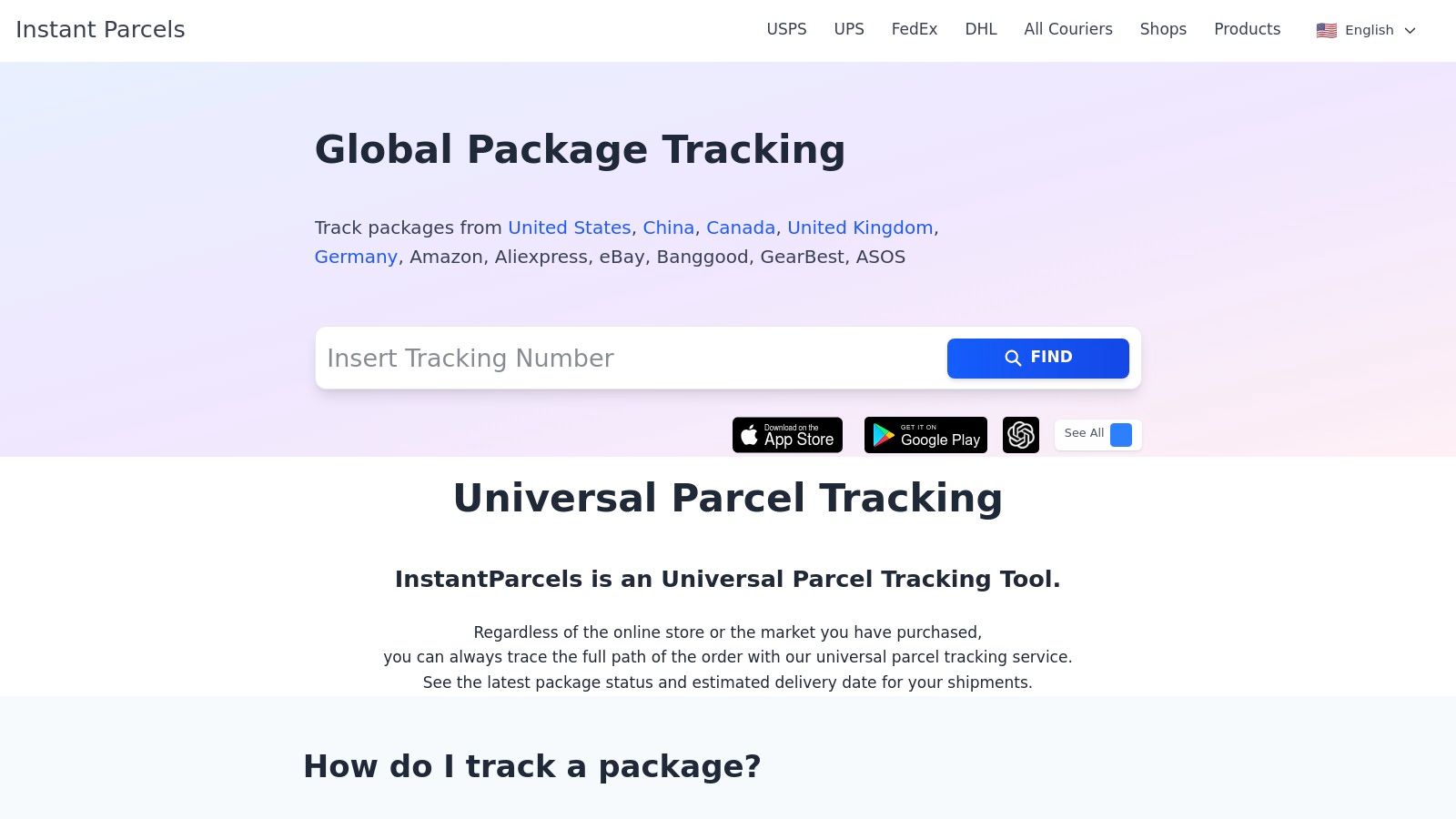
The platform is engineered for clarity and efficiency, making it an invaluable tool for e-commerce sellers, customer support teams, and frequent online shoppers. By standardizing status updates across all couriers, Instant Parcels translates confusing carrier-specific jargon into clear, consistent milestones like “In Transit” or “Out for Delivery.” This consistency reduces customer confusion and minimizes “Where is my order?” inquiries, allowing support teams to focus on more complex issues.
Standout Features and Use Cases
The utility of Instant Parcels extends beyond simple tracking. It offers practical features designed for real-world logistical challenges:
- Automatic Carrier Detection: This is the platform's signature feature. It removes the guesswork and manual effort required to identify which courier is handling a specific package, a common pain point for dropshippers and businesses using multiple fulfillment partners.
- Unified Dashboard: Users can save and monitor multiple shipments at once, providing a single source of truth for all active deliveries. This is ideal for logistics coordinators overseeing inbound and outbound inventory.
- Easy Sharing: A quick-share function allows users to send a tracking link to customers or colleagues with a single click, enhancing post-purchase communication and transparency. To better understand how these numbers function, you can explore more about what a tracking number is on instantparcels.com.
Practical Assessment
While Instant Parcels excels in functionality, potential users should note its current limitations. The website does not publicly list pricing, certifications, or customer testimonials, which can make it difficult to evaluate its cost-effectiveness and reputation without direct contact. Additionally, the site has recently displayed a client-side error, suggesting potential availability issues. We recommend reaching out to the vendor to confirm service status, pricing tiers, and support options before full-scale implementation.
- Website: https://instantparcels.com
- Best For: E-commerce sellers, customer support teams, and logistics coordinators needing a centralized, user-friendly tracking solution.
2. USPS Tracking and Informed Delivery (United States Postal Service)
For anyone in the United States, going directly to the source offers unparalleled accuracy. The official USPS Tracking portal is the definitive authority for any package moving through its network, providing the most current and detailed scan data available. It's an essential tool for both online shoppers and small businesses who primarily use USPS for domestic shipping.
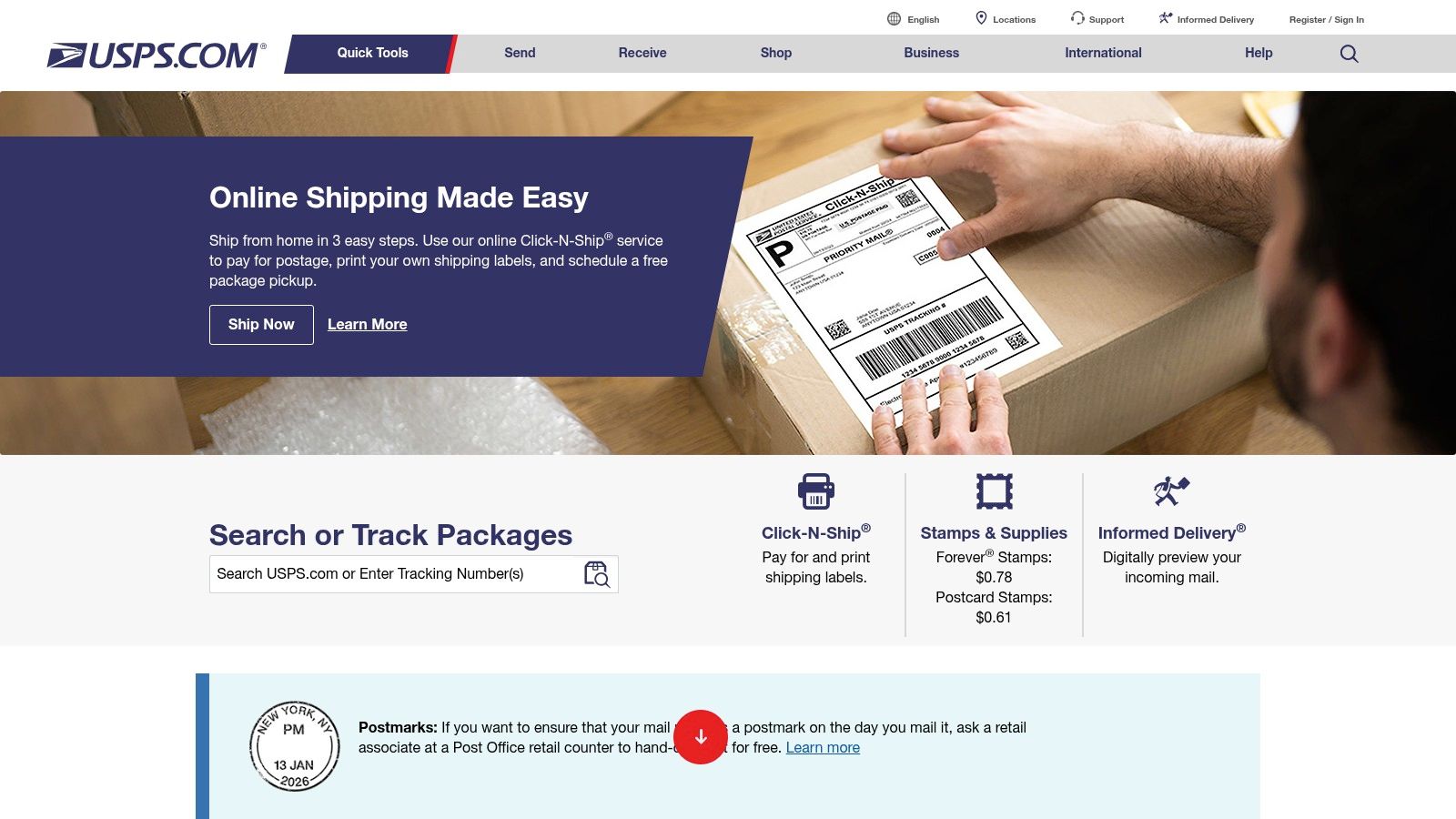
The platform’s standout feature is Informed Delivery, a completely free service that elevates it from a simple tracking page to a comprehensive delivery management hub. Users receive daily email digests with grayscale images of incoming letter mail, along with app-based notifications for packages. This service provides a holistic view of everything arriving at your address, not just parcels you have tracking numbers for. The ability to manage deliveries, such as placing a vacation hold or providing delivery instructions, adds a layer of control not found in most third-party trackers.
Key Features and User Experience
While the core tracking function is straightforward, Informed Delivery requires a simple, one-time identity verification process. The user interface on both the website and the dedicated mobile app is clean, though some users report occasional sluggishness during peak hours.
- Best Use Case: U.S. residents and small businesses seeking the most reliable data for USPS shipments and free, proactive management of all incoming mail and packages.
- Pricing: Completely free for all features, including the Informed Delivery service.
- Limitations: Its primary weakness is its exclusivity; it only tracks items within the USPS system. Once a package is handed off to an international carrier, or before it enters the U.S. network, you will need a different solution for end-to-end visibility, making it a less than ideal candidate for the single best parcel tracking website for global shipments.
Website: https://www.usps.com/
3. UPS Tracking and UPS My Choice
As a global logistics leader, UPS provides one of the most robust first-party tracking systems available. For businesses and individuals who frequently ship or receive packages via the "Big Brown," using the official UPS Tracking portal ensures access to the most precise, real-time data directly from the source. It is the definitive authority for any parcel within the UPS network, offering granular details from origin scan to final delivery.
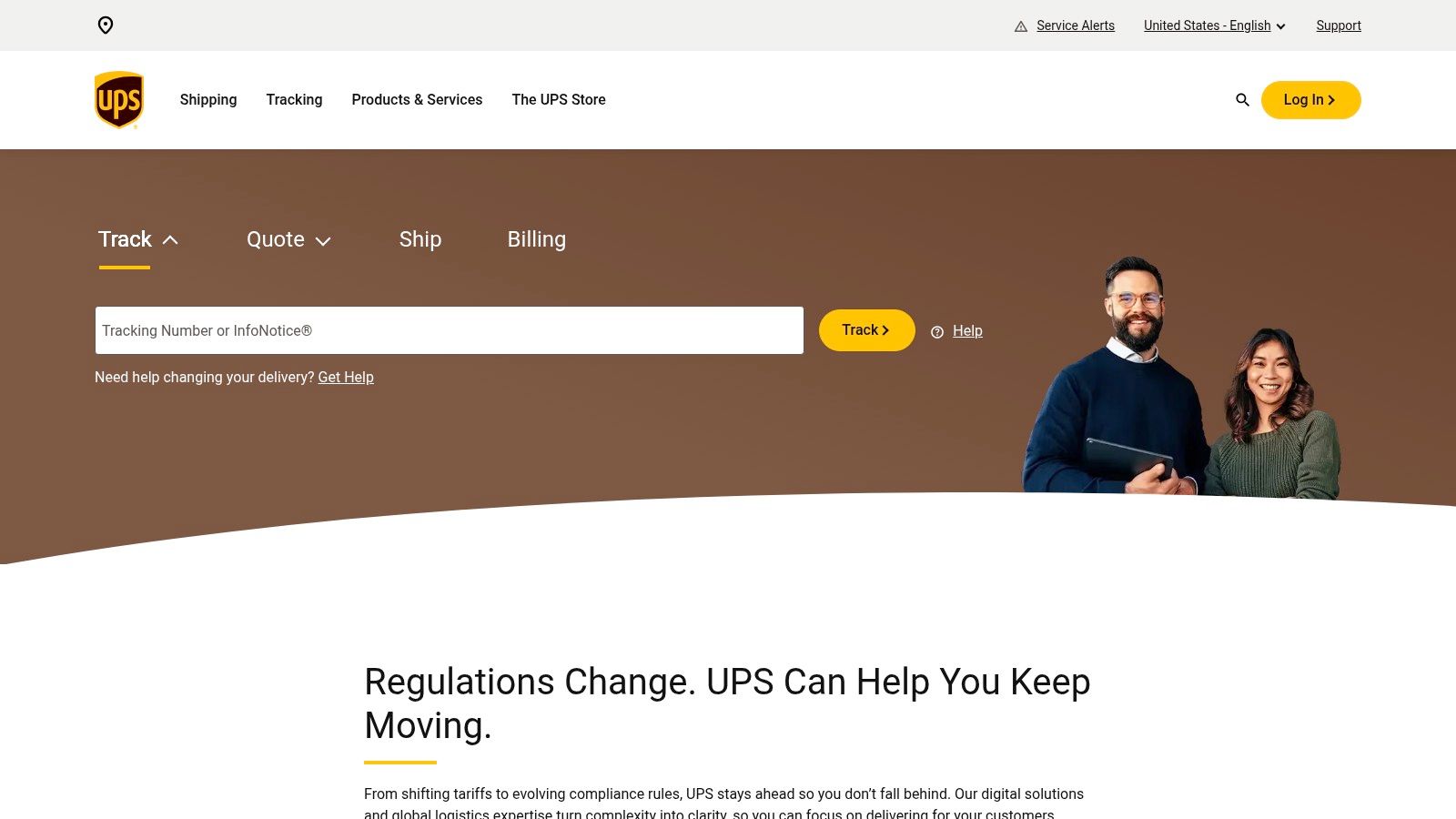
The platform's key advantage is UPS My Choice, a freemium service that transforms a simple tracking page into a powerful delivery management tool. The free Basic membership provides delivery alerts and an online calendar to view upcoming shipments. The paid Premium tier unlocks significant control, allowing users to redirect packages to another address, reschedule delivery dates, and receive confirmed delivery windows. Features like photo proof of delivery offer peace of mind, making it a valuable service for high-value shipments.
Key Features and User Experience
The standard tracking interface is clean and efficient, but the real power is unlocked by signing up for UPS My Choice. The website and mobile app are generally responsive and provide a clear overview of all inbound and outbound shipments tied to your address. This system is a strong contender for the best parcel tracking website for those heavily invested in the UPS ecosystem.
- Best Use Case: Frequent UPS users, high-volume online shoppers, and home-based businesses that need direct control over delivery timing and location for their parcels.
- Pricing: Standard tracking is free. UPS My Choice has a free Basic tier and a paid Premium tier (currently $19.99/year), with some delivery change actions incurring separate fees.
- Limitations: The service is strictly limited to packages handled by UPS. You won't see packages from other carriers, and tracking visibility ends once a parcel is transferred to a different final-mile delivery partner, a common practice in some international or rural deliveries.
Website: https://www.ups.com/
4. FedEx Tracking (Advanced Tracking and Delivery Manager)
For businesses and individuals deeply integrated with the FedEx network, their native tracking tools offer a level of detail and control that third-party services often cannot match. The platform is more than a simple tracking page; it's a powerful logistics tool designed for high-volume shippers and recipients who require granular visibility and robust proof-of-delivery documentation for their shipments.
The platform’s strength lies in its business-centric features like FedEx Advanced Tracking. This free, login-required dashboard can monitor up to 20,000 active shipments, offering customizable reports, filtering options, and detailed shipment views. For recipients, FedEx Delivery Manager provides proactive notifications and the ability to customize delivery times or locations. The inclusion of signature images and picture proof of delivery is a crucial asset for customer support teams resolving delivery disputes.
Key Features and User Experience
While the public tracking page is simple, the real power is unlocked by creating a free account. The interface for Advanced Tracking is data-rich and geared toward desktop use, feeling more like a business application than a consumer tool. This focus on functionality over form makes it indispensable for its target audience.
- Best Use Case: High-volume e-commerce businesses and their support teams who primarily use FedEx and need detailed, actionable data, custom reports, and strong proof-of-delivery assets.
- Pricing: Free to use, including advanced features which require account registration.
- Limitations: Its biggest drawback is its single-carrier focus. It provides zero visibility for packages outside the FedEx ecosystem, making it an unsuitable candidate for anyone needing the single best parcel tracking website for multi-carrier or global logistics. Some of the advanced tools are also not fully optimized for mobile devices.
Website: https://www.fedex.com/
5. DHL Tracking (DHL eCommerce Solutions U.S. and DHL Express)
For international shipments, especially those originating from or destined for Europe and Asia, DHL's official tracking portal is an indispensable resource. It serves as the primary source of truth for any package within its extensive global network, offering distinct tracking experiences for its premium DHL Express and its more economical DHL eCommerce services. This makes it a crucial tool for anyone dealing with cross-border e-commerce, where DHL is a dominant player.
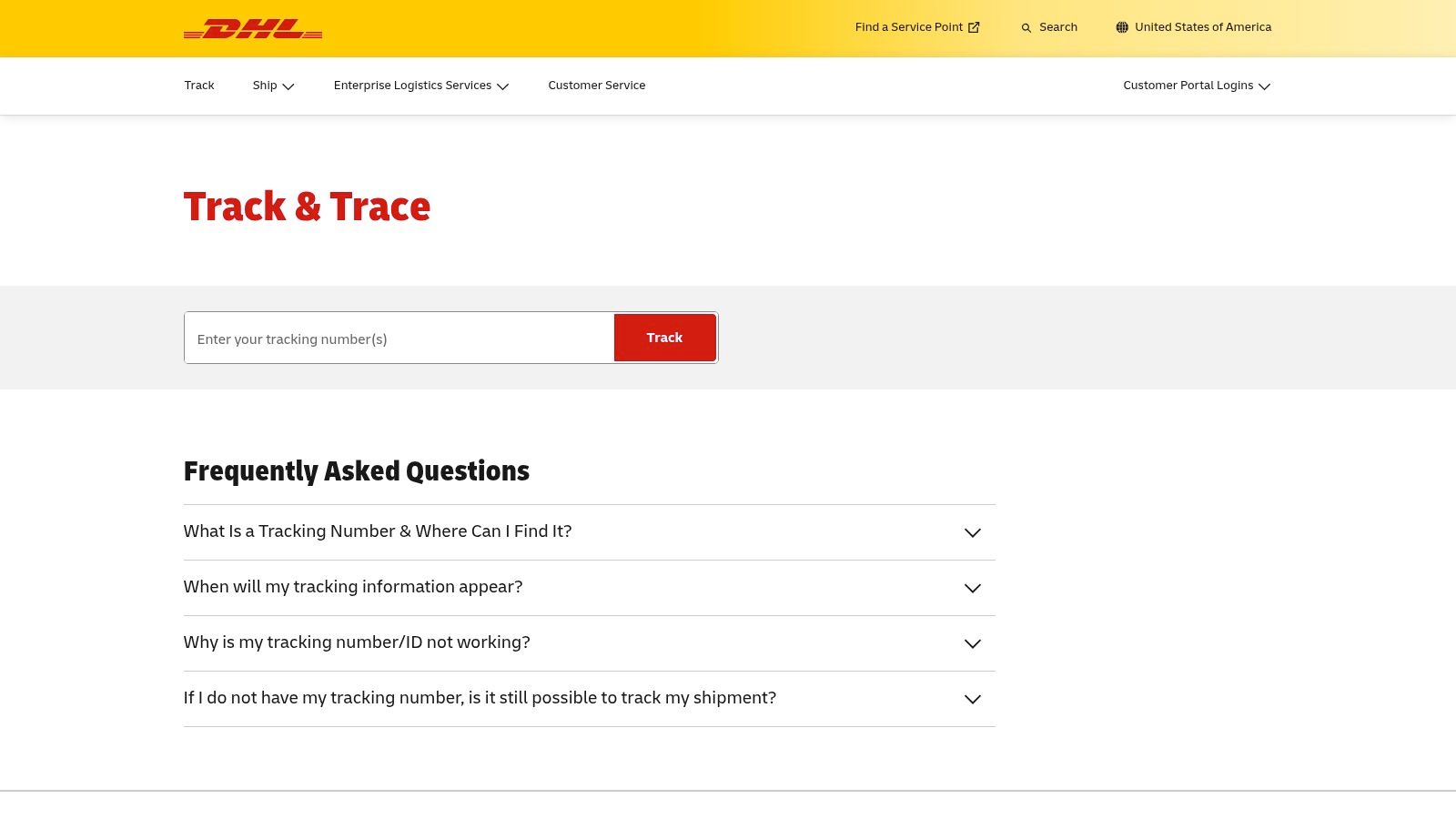
The platform’s key strength lies in its specialized portals that clarify the journey of different service levels. While DHL Express offers detailed, end-to-end international tracking, the DHL eCommerce portal is particularly useful for marketplace sellers and shoppers. It effectively tracks the initial leg of the journey before handoff to local postal services like USPS for final delivery. For premium Express shipments, the On-Demand Delivery service allows recipients to customize delivery options, such as rescheduling, authorizing a signature release, or changing the delivery address, providing a high degree of control.
Key Features and User Experience
The website provides clear, separate tracking inputs for its various services, which helps avoid confusion. The interface is modern and efficient, providing milestone-based tracking updates that are easy to understand. While the core tracking is straightforward, the distinction between Express and eCommerce is important; the latter may show a tracking gap during the handoff to the final-mile carrier.
- Best Use Case: Individuals and businesses tracking international shipments, particularly those involving DHL Express or cross-border e-commerce packages that start in the DHL network.
- Pricing: Free to use for tracking all DHL shipments.
- Limitations: The primary drawback is the potential loss of real-time granularity when DHL eCommerce hands packages to a local partner like USPS. At that point, the package's final tracking details may be more current on the partner's website, making it a less-than-perfect candidate for the single best parcel tracking website for end-to-end domestic visibility.
Website: https://www.dhl.com/us-en/home/tracking/tracking-ecommerce.html
6. 17TRACK
As one of the most recognized names in universal package tracking, 17TRACK has built a reputation for its massive carrier support and straightforward interface. It serves as a powerful aggregator, capable of identifying and tracking shipments from over 1,000 different postal services and express couriers worldwide. This makes it an indispensable tool for consumers and e-commerce sellers dealing with a diverse range of international shipping providers, especially those originating from Asia.
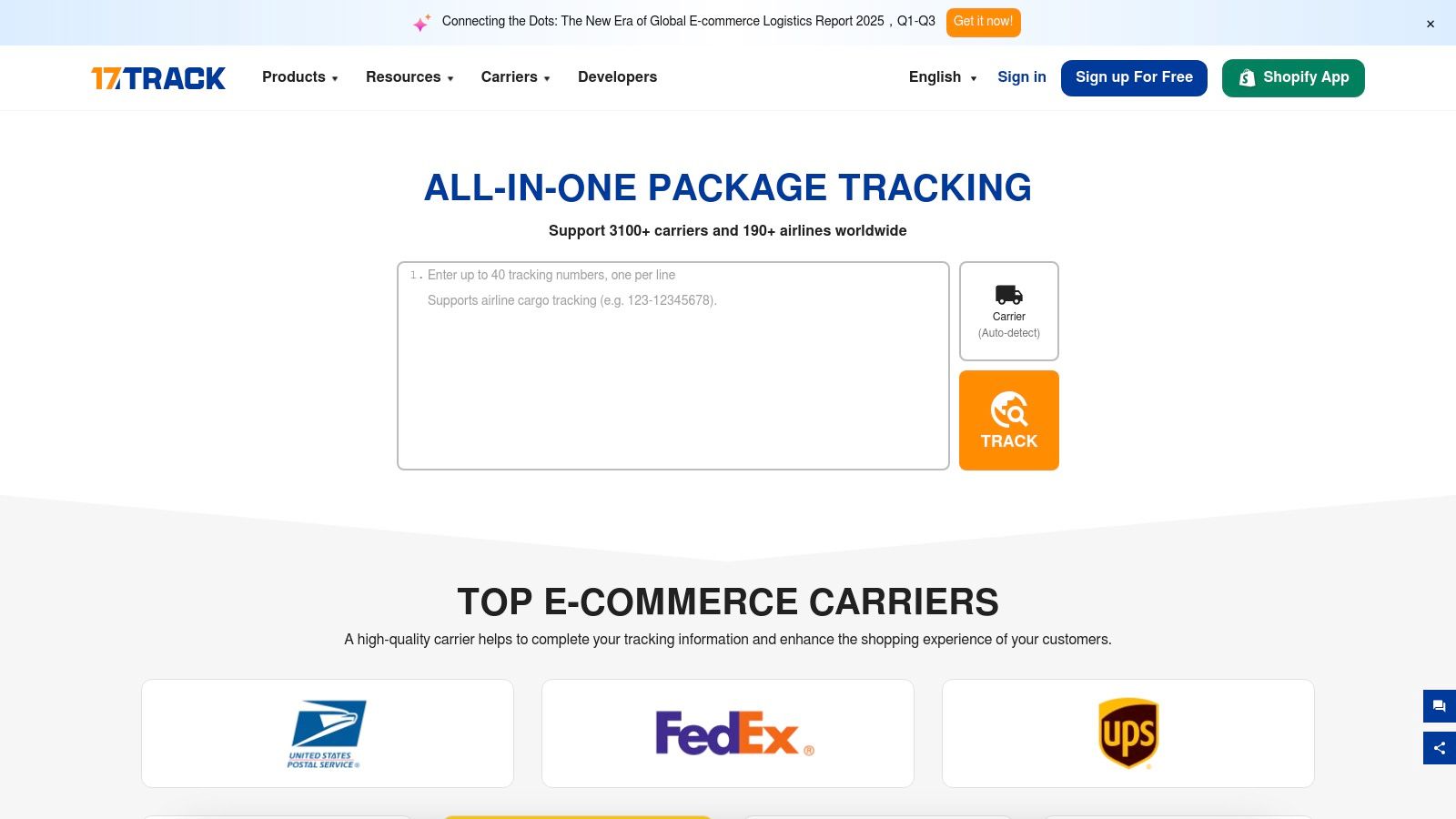
The platform's core strength lies in its automatic carrier detection and batch tracking capabilities, allowing users to paste up to 40 tracking numbers at once. For businesses, 17TRACK offers API access and Shopify integrations through a flexible, quota-based pricing model. Instead of a recurring monthly subscription, businesses can purchase a set number of tracking "credits," offering a cost-effective solution for those with fluctuating shipment volumes. This makes it a contender for the best parcel tracking website for small to medium-sized businesses.
Key Features and User Experience
The user interface on both the web and mobile app is functional and direct, focusing on providing tracking data without unnecessary frills. While the free consumer version is robust, businesses must purchase tracking quotas to register and monitor new shipments beyond a small initial limit. This prepaid model avoids mandatory subscriptions but requires manual repurchasing when quotas are exhausted.
- Best Use Case: Online shoppers and e-commerce sellers who need a reliable, all-in-one tracker for a vast number of global carriers, especially for cross-border shipments. Learn more about how to track international packages effectively.
- Pricing: Free for general consumer use with limits. Business plans operate on a prepaid, quota-based system (e.g., $15 for 600 tracking credits).
- Limitations: The business model requires actively managing and repurchasing quotas, which can be an administrative inconvenience for high-volume shippers compared to set-and-forget subscription models.
Website: https://www.17track.net/
7. AfterShip
AfterShip is more than a simple tracking tool; it’s a complete post-purchase platform designed for e-commerce businesses. While individuals can use its free consumer app, its core strength lies in empowering merchants to create a branded, proactive, and insightful tracking experience for their customers. By integrating with over 1,200 carriers and major e-commerce platforms, it replaces generic carrier pages with a professional, branded portal.
The platform’s standout feature is its powerful combination of branded tracking pages and automated notifications. Merchants can customize tracking pages with their own logo, marketing assets, and product recommendations, turning a routine touchpoint into a valuable marketing opportunity. Proactive email and SMS updates on shipment status significantly reduce "Where Is My Order?" inquiries, improving customer satisfaction and freeing up support resources. This makes it a strong contender for the best parcel tracking website for growing online stores.
Key Features and User Experience
AfterShip offers a clean, data-rich dashboard that provides analytics on shipping performance, delivery times, and notification engagement. The setup is straightforward, with deep integrations for platforms like Shopify and WooCommerce. While the free plan is generous, scaling businesses will find the most value in paid tiers that unlock advanced analytics, APIs, and customization options.
- Best Use Case: E-commerce merchants of all sizes who want to provide a professional, branded tracking experience, automate customer communication, and gain insights into shipping performance.
- Pricing: A free plan is available for up to 50 shipments per month. Paid plans scale up, starting from $11/month, with costs based on shipment volume.
- Limitations: The primary focus is on business users, so individual consumers may find it overly complex. Overage fees for exceeding monthly shipment limits on paid plans can be a concern for businesses with unpredictable sales volumes.
Website: https://www.aftership.com/
8. Ship24
Ship24 offers a compelling blend of extensive carrier support and scalable pricing, making it a strong contender for users whose tracking needs range from casual to commercial. It provides a universal tracking solution that automatically detects and follows parcels across more than 1,500 different couriers and postal services worldwide. This wide net is ideal for online shoppers dealing with international sellers or e-commerce businesses managing a diverse logistics network.
What sets Ship24 apart is its clear and accessible upgrade path. Individual users can track a small number of parcels for free, while businesses can easily scale up to paid plans that unlock powerful features. These include a centralized dashboard for managing all shipments, customizable branded tracking pages to enhance the post-purchase customer experience, and automated delivery notifications. The inclusion of API and webhook support also makes it a versatile tool for developers looking to integrate tracking functionality into their own systems.
Key Features and User Experience
The interface is clean and straightforward, focusing on a powerful search bar that handles multiple tracking numbers at once. The auto-detection feature works reliably, saving users the hassle of identifying the correct courier. For businesses, the ability to bulk import shipments and apply filters in the dashboard streamlines operations significantly.
- Best Use Case: Individuals and businesses needing broad, multi-carrier coverage with a cost-effective, scalable solution that grows with their needs from free personal use to enterprise-level integration.
- Pricing: A free plan allows tracking up to 10 shipments per month. Paid business plans start with affordable tiers for higher volumes and advanced features like branded pages and API access.
- Limitations: The free tier is quite limited in volume, making it suitable only for very occasional use. Additionally, some specific international courier updates may consume multiple tracking credits per shipment on paid plans, which can impact costs for certain routes.
Website: https://www.ship24.com/
9. Parcel Monitor
Parcel Monitor is designed for the modern online shopper who juggles orders from multiple stores and couriers. It offers a clean, user-centric platform that simplifies universal package tracking across more than 1,000 carriers. By focusing on consumer convenience, it provides a straightforward solution for those who want a consolidated view of all their incoming shipments without the complexity of a business-grade logistics suite.
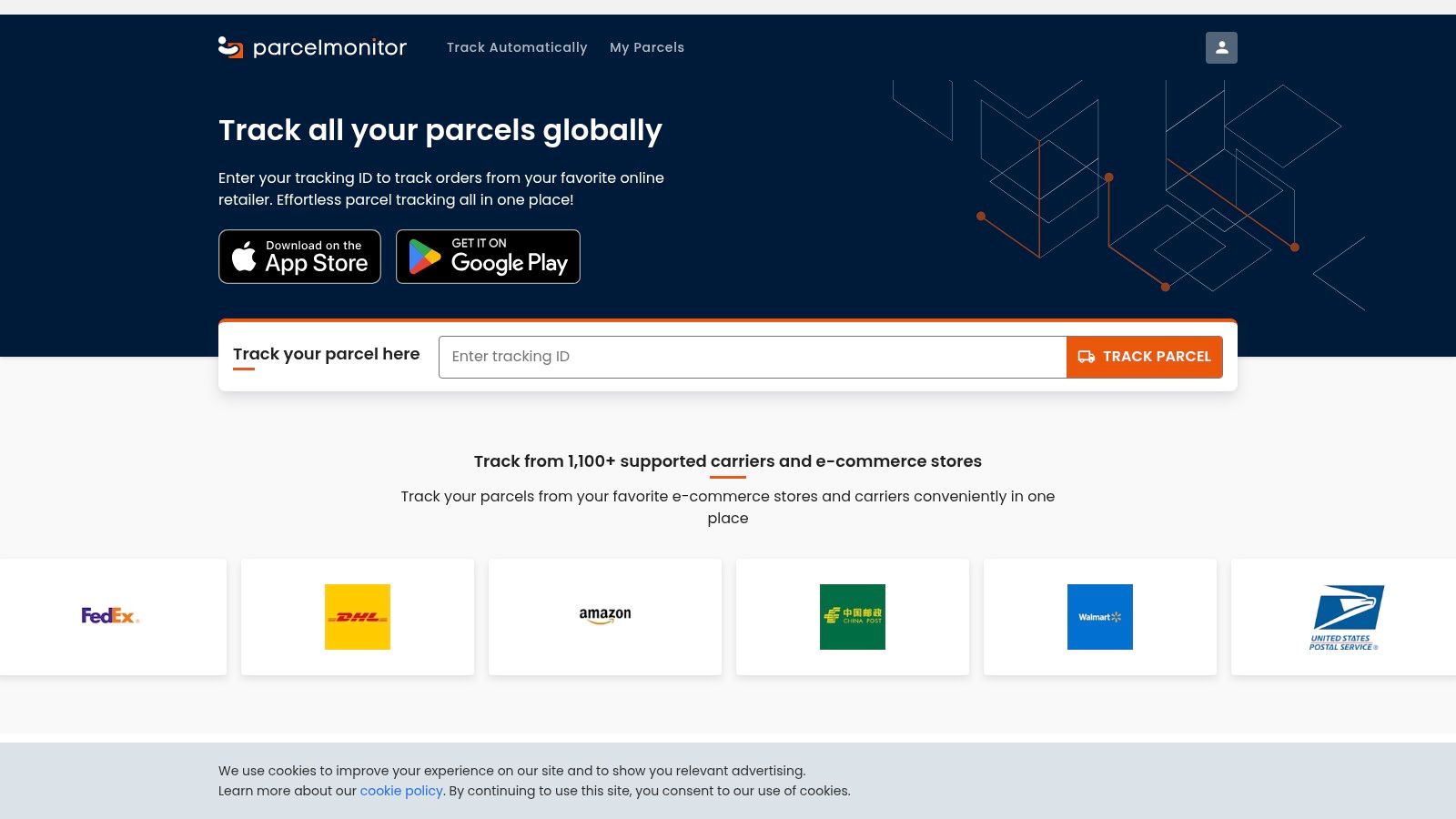
The platform's key differentiator is its optional Gmail connection, which automatically scans your inbox for shipping confirmation emails and imports tracking numbers into your dashboard. This "set it and forget it" feature, combined with real-time push notifications via its mobile app, eliminates the need to manually copy and paste tracking codes. It creates a seamless, automated feed of all your purchases, making it an excellent choice for frequent shoppers who value convenience and simplicity.
Key Features and User Experience
The web interface and mobile app are fast, minimalist, and easy to navigate, prioritizing a quick lookup experience. Connecting a Gmail account is secure and provides immediate value by populating your tracking list. While it provides essential status updates, it may not offer the granular scan-point details available directly from a carrier's own site.
- Best Use Case: Online shoppers and casual sellers looking for a free, automated way to track all their packages from various stores and carriers in one place.
- Pricing: Free for consumer use, including the Gmail connection and mobile app notifications.
- Limitations: Lacks the advanced business features found in B2B platforms, such as branded tracking pages, detailed analytics, or extensive API integrations. For authoritative delivery details or dispute resolution, users will still need to refer to the primary carrier's website.
Website: https://www.parcelmonitor.com/
10. Parcels (ParcelsApp)
ParcelsApp carves out a niche by extending its tracking capabilities beyond standard packages into the world of freight and bulk shipments. This universal tracker excels at handling complex international logistics, automatically detecting and following parcels across multiple couriers, postal services, air waybills (AWB), and even full shipping containers. It provides a consolidated timeline, making it a powerful tool when a single shipment involves several handoffs between different logistics networks.
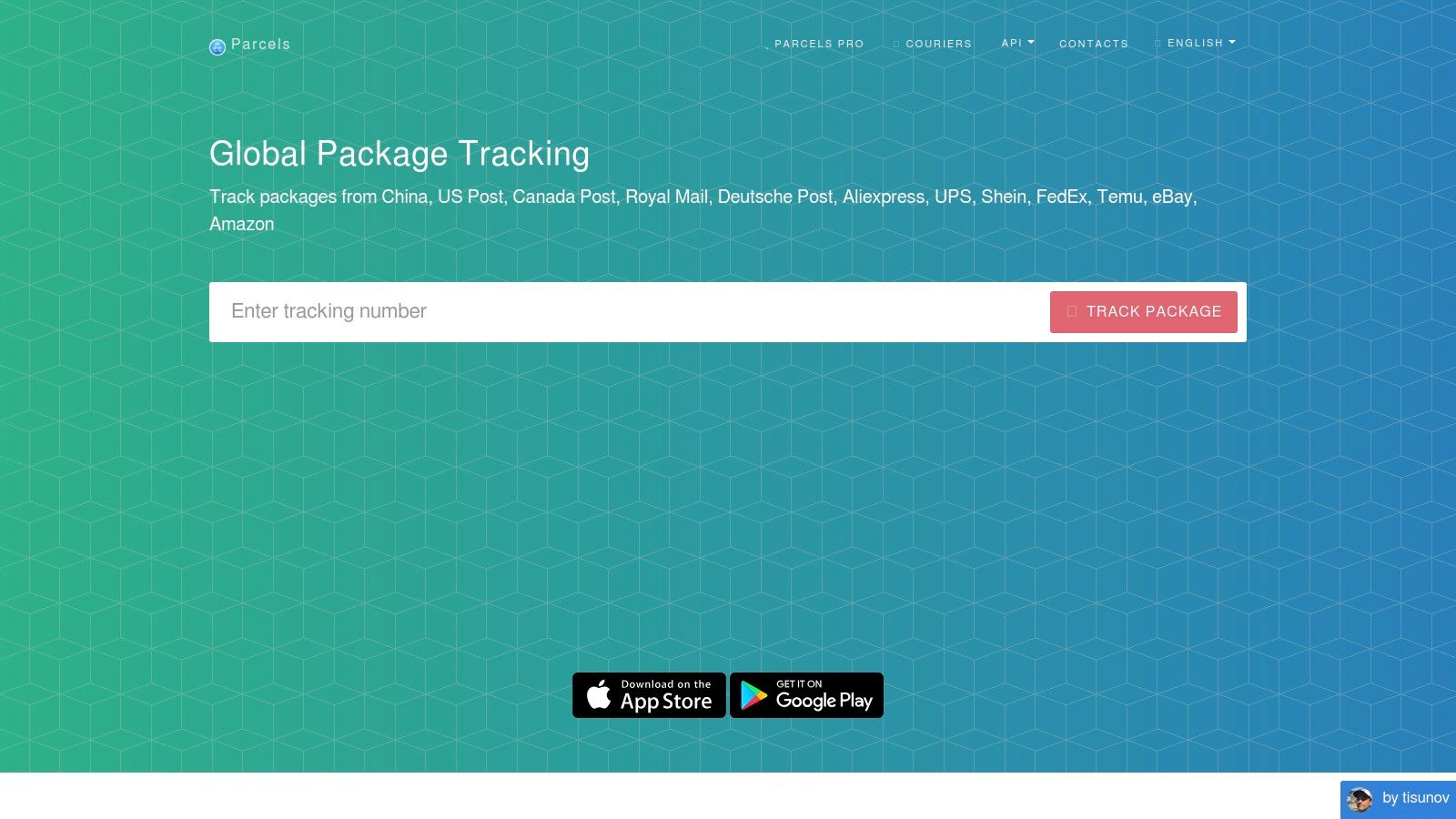
The platform’s strength is its ability to interpret various identifier formats, from a standard tracking number to an AWB or container number, which is invaluable for businesses involved in global trade or freight forwarding. This makes it a go-to solution when you need to track something that isn’t just a small box moving through a single postal system. The service presents a unified view of a shipment's journey, translating carrier-specific jargon into a clear, chronological history.
Key Features and User Experience
The user interface is minimalist and direct: you enter your number, and it gets to work. While it offers both web and mobile access, some users have reported occasional discrepancies in data freshness compared to official carrier sites, particularly in certain regions. It serves as an excellent aggregator but should be used in conjunction with primary carrier portals for mission-critical confirmation.
- Best Use Case: Businesses and individuals tracking international freight, air cargo, or multi-carrier shipments where a single, consolidated timeline is required.
- Pricing: Free for general use.
- Limitations: The reliability of its scan data can vary, and it is best used as a high-level overview rather than the sole source of truth. It lacks the advanced delivery management features found on first-party carrier websites.
Website: https://parcels.app/
11. PKGE (pkge.net)
PKGE strikes a compelling balance between a powerful, feature-rich tracking tool for consumers and a scalable solution for e-commerce merchants. Supporting over 850 carriers globally, it offers a versatile platform that adapts to different user needs, from a casual shopper tracking a single order to a Shopify store owner looking to enhance their post-purchase customer experience.
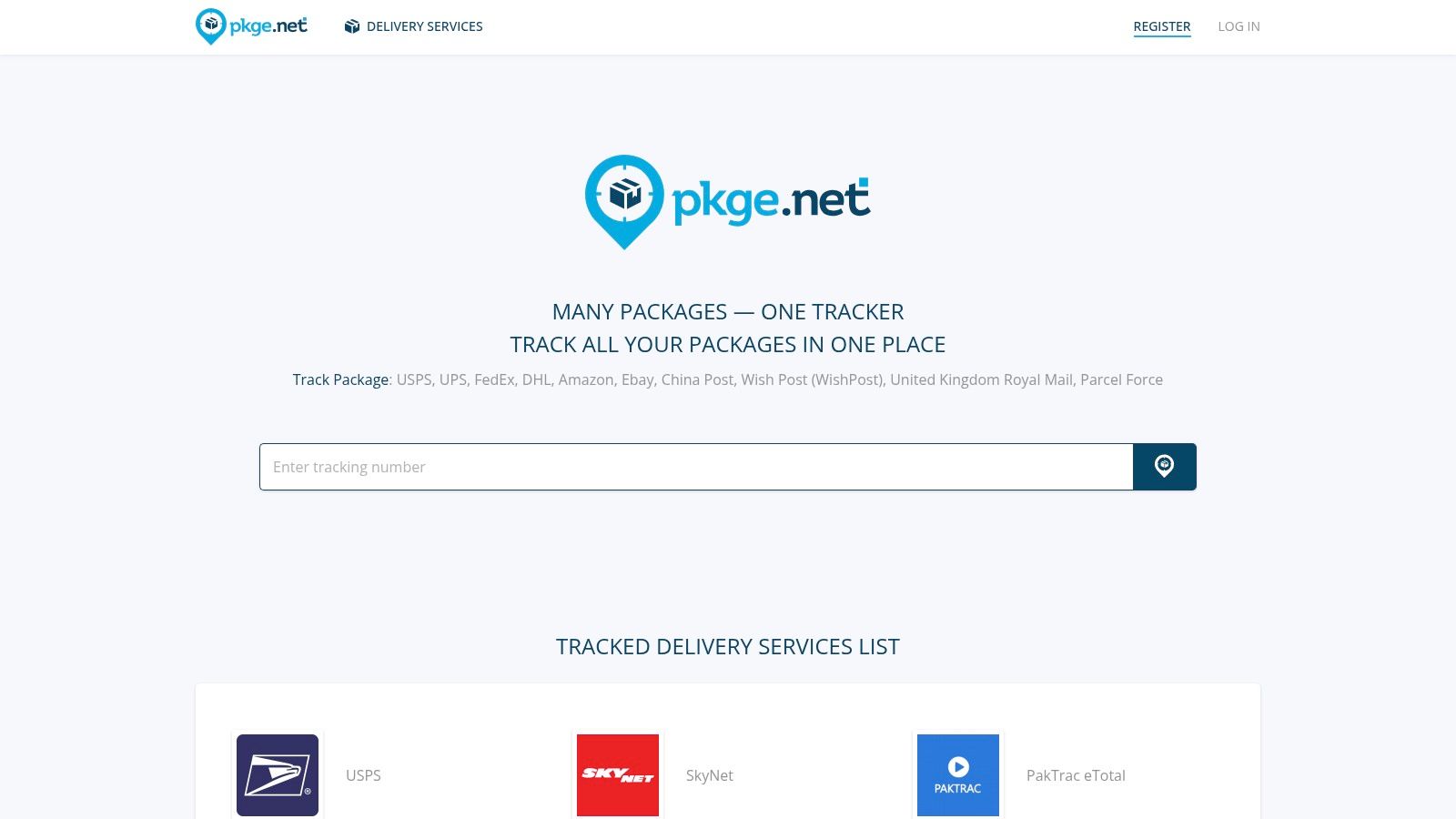
The platform’s strength lies in its dual focus. For individual users, the mobile app offers convenient features like automatic package import from Gmail and Amazon, delivering instant push notifications for every scan update. For businesses, PKGE provides a suite of tools including a dedicated Shopify app, API access, and the ability to create custom-branded tracking pages. This allows merchants to maintain brand consistency and use the tracking experience as a marketing opportunity, a key differentiator from many consumer-only apps.
Key Features and User Experience
The interface across the website, app, and business portal is clean and modern, prioritizing ease of use. Setting up the business features, particularly through the Shopify app, is a quick process designed to get merchants running in minutes. The multilingual support makes it a practical option for stores with an international customer base.
- Best Use Case: E-commerce merchants on Shopify and consumers who want a simple, automated tracking app that integrates with their email and major online retailers.
- Pricing: Free for basic consumer tracking. Business plans with branded pages and advanced features have tiered pricing, and some notifications like SMS may have additional costs.
- Limitations: While carrier coverage is extensive, the exact number can fluctuate based on data sources and integrations. The cost structure for advanced business features, particularly variable costs for certain notifications, requires careful monitoring for high-volume sellers.
Website: https://pkge.net/
12. Shop app (by Shopify) — Track Orders
For the modern online shopper, the Shop app from Shopify transforms parcel tracking from a chore into a seamless, automated experience. It acts as a personal delivery hub, automatically pulling in tracking information for online purchases by connecting to a user's Gmail or Outlook account. This removes the need to hunt through emails for individual tracking numbers, consolidating every incoming order into one visually appealing interface.
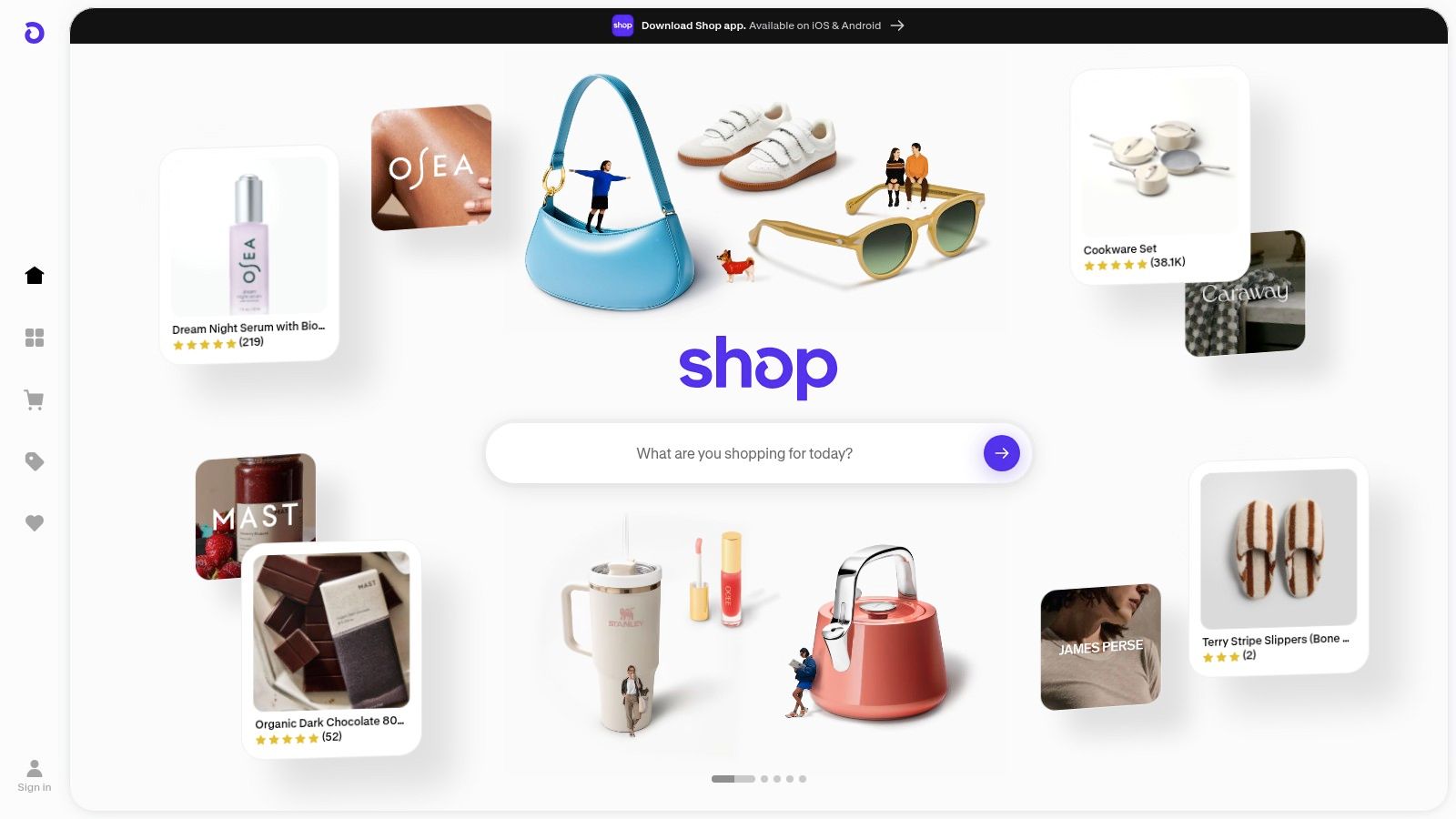
The platform's standout feature is its "all orders in one place" functionality. By scanning your inbox for shipping confirmations, Shop builds a real-time feed of all your deliveries, complete with live map tracking and push notifications for every key transit event. This consumer-centric approach simplifies the post-purchase journey, providing clarity and reducing the anxiety of wondering where a package is. It even supports manual entry for orders that aren't automatically detected.
Key Features and User Experience
The setup is quick, requiring a simple email connection to get started. The mobile app interface is a highlight, offering a clean, intuitive, and map-based visual for tracking your items. While the core strength is its automatic discovery, the app remains a powerful manual tracker as well.
- Best Use Case: Frequent online shoppers who want a free, set-it-and-forget-it solution for automatically consolidating and tracking all their orders from various retailers in one place.
- Pricing: Completely free for consumers to use.
- Limitations: The primary tracking and management experience is designed for the mobile app, with limited functionality on the website. While generally accurate, the email-parsing feature may occasionally fail to identify shipping confirmations from less common or non-Shopify merchants.
Website: https://shop.app/
Top 12 Parcel Tracking Websites — Feature Comparison
| Service | Core strengths ✨ | Target audience 👥 | UX / Quality ★ | Pricing & Value 💰 |
|---|---|---|---|---|
| Instant Parcels 🏆 | ✨ Auto carrier detection, unified tracking, status standardization | 👥 Shoppers, e‑commerce sellers, support teams | ★★★★☆ Fast, accurate UI (availability note) | 💰 Unknown — contact vendor |
| USPS Tracking / Informed Delivery | ✨ First‑party scans, mail previews, delivery controls | 👥 US consumers, mail recipients | ★★★★☆ Authoritative; occasional slowdowns | 💰 Free |
| UPS Tracking / My Choice | ✨ Delivery changes, photo POD, alerts | 👥 Frequent UPS recipients, households | ★★★★☆ Trusted; delivery-management tools | 💰 Basic free; Premium paid |
| FedEx Tracking / Delivery Manager | ✨ Advanced tracking, signature/GPS proof, reporting | 👥 Businesses, high‑volume shippers | ★★★★☆ Business‑grade visibility, robust reports | 💰 Free to register; some tools gated |
| DHL Tracking (Express & eCommerce) | ✨ International end‑to‑end, On‑Demand Delivery | 👥 International shippers, marketplace sellers | ★★★☆☆ Good cross‑border; handoff variability | 💰 Free |
| 17TRACK | ✨ 1,000+ carriers, batch lookups, API | 👥 Consumers & sellers needing wide coverage | ★★★★☆ Very wide coverage; quota model | 💰 Free tier + quota‑based paid |
| AfterShip | ✨ Branded pages, notifications, analytics, 1,200+ carriers | 👥 Merchants, e‑commerce brands | ★★★★☆ Scales to enterprise; advanced features paid | 💰 Clear tiers; free starter |
| Ship24 | ✨ 1,500+ couriers, bulk import, API/webhooks | 👥 Users scaling from casual to enterprise | ★★★★☆ Competitive, cost‑effective scaling | 💰 Free limited; paid tiers |
| Parcel Monitor | ✨ Gmail auto‑import, mobile app, push notifications | 👥 Shoppers, casual sellers | ★★★★☆ Simple, fast consolidated tracking | 💰 Free / basic |
| Parcels (ParcelsApp) | ✨ AWB/container tracking, multi‑carrier timelines | 👥 International shippers, freight users | ★★★☆☆ Strong for AWB; mixed freshness | 💰 Free / freemium |
| PKGE (pkge.net) | ✨ Shopify app, branded pages, multilingual, auto‑import | 👥 SMBs, Shopify merchants | ★★★★☆ Good consumer + SMB balance | 💰 Free/basic; some SMS costs |
| Shop app (by Shopify) | ✨ Auto order discovery, live map, email connect | 👥 Consumers wanting all orders in one place | ★★★★☆ App‑centric, real‑time maps | 💰 Free |
Final Thoughts
Navigating the complex world of shipping and logistics can feel overwhelming, but finding the best parcel tracking website for your specific needs is a crucial first step toward clarity and control. Throughout this guide, we've explored a diverse landscape of tracking solutions, from the foundational services offered by major carriers like USPS, UPS, and FedEx to the powerful, multi-carrier aggregators like Instant Parcels, 17TRACK, and AfterShip. The key takeaway is that no single platform is universally perfect; the right choice hinges entirely on who you are and what you need to accomplish.
For the casual online shopper, a simple, free tool like ParcelsApp or Ship24 might be all you need to keep tabs on a few domestic and international orders. For the dedicated Shopify user, the integrated experience of the Shop app provides unparalleled convenience. However, for those with more demanding requirements, the decision requires deeper consideration.
Choosing Your Ideal Tracking Hub
To make the best decision, you must first define your primary use case. Your selection process should be guided by answering a few critical questions:
- Who are you? Are you an individual consumer, a small e-commerce seller, a dropshipper managing hundreds of international orders, or a customer support team lead? Your role dictates your feature priorities.
- What is your volume? Tracking a handful of packages a month has vastly different requirements than managing thousands. High-volume sellers and support teams need robust dashboards, bulk import features, and automation capabilities that free services often lack.
- What is your budget? While many excellent free options exist, paid plans often unlock critical business-oriented features like branded tracking pages, advanced analytics, delivery notifications, and API access for deeper integration.
- What carriers do you use? Ensure your chosen platform provides reliable, real-time support for the specific domestic and international carriers you depend on most frequently.
E-commerce entrepreneurs and customer support professionals, in particular, should view their tracking solution as a core part of their customer experience toolkit. A proactive, transparent tracking process significantly reduces "Where Is My Order?" (WISMO) inquiries, builds customer trust, and frees up valuable support resources.
The Strategic Advantage of a Powerful Tool
For businesses aiming to scale, a comprehensive platform like Instant Parcels offers a distinct competitive advantage. Its ability to centralize data from over 1,200 carriers, provide a unified operational dashboard, and offer a branded, customer-facing tracking experience moves it beyond a simple utility. It becomes an integral part of your post-purchase strategy, turning a moment of customer anxiety into an opportunity for engagement and brand reinforcement.
Furthermore, integrating such a powerful tracking system is just one piece of a larger customer service puzzle. When your support team is no longer bogged down by repetitive tracking questions, they can focus on more complex issues. For businesses looking to optimize this process even further, understanding how to automate responses to common queries is a logical next step. Exploring strategies for boosting efficiency with AI chatbots for customer support can provide valuable insights into creating a seamless, scalable, and highly effective user satisfaction workflow.
Ultimately, the goal is to transform parcel tracking from a reactive necessity into a proactive asset. By carefully evaluating your needs and selecting the best parcel tracking website to meet them, you can gain unparalleled visibility into your logistics, enhance customer satisfaction, and build a more efficient, resilient operation. The right tool empowers you to stop wondering where your packages are and start focusing on where your business is going.