
How to Track USPS Priority Mail International with Confidence
So, you've sent a package overseas with USPS Priority Mail International and now you're waiting. The key to tracking it without pulling your hair out is knowing what to expect. Your package is on a journey with two distinct legs: its time in the U.S. network, and its adventure abroad with a new postal service.
What to Expect When Tracking International Mail
Before you even plug in that tracking number, it’s helpful to understand the typical path your package will take. This isn’t like sending something across state lines; international shipping is a whole different ballgame involving multiple carriers and, of course, customs.
Priority Mail International is a go-to for many because it hits that sweet spot between speed and affordability, handling packages up to 70 pounds. But once it leaves the U.S., the tracking game changes. This simple flowchart breaks down the basic stages.
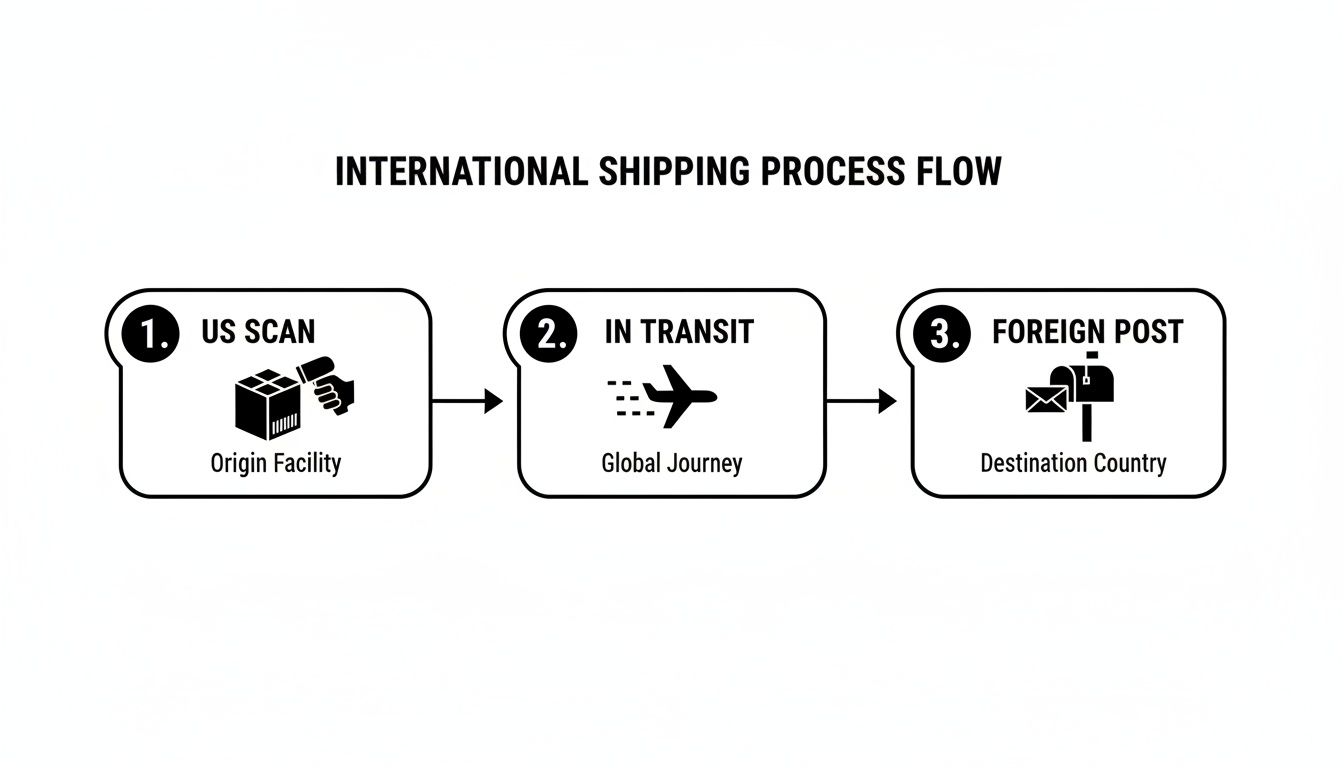
As you can see, the handover to a foreign postal authority is a critical step. It’s precisely at this point that tracking updates can become less frequent, which is often a source of anxiety for shippers.
The Two-Part Journey of Your Package
The first leg of the trip is usually smooth and predictable. As soon as your package is scanned at the post office, you’ll see consistent updates as it moves through the USPS domestic network. It travels from a local facility, to a regional sorting hub, and finally lands at an International Service Center (ISC). These massive hubs in cities like New York, Miami, or Los Angeles are the final U.S. checkpoint.
Once it's processed and dispatched from the ISC, part two begins. Your package is put on a plane and heads to its destination country. This is where things can go quiet for a bit. It’s now in the hands of another country’s postal system and needs to get through their customs inspection process.
Pro Tip: A gap in tracking scans after your package leaves the U.S. is completely normal. It doesn't mean your shipment is lost. More often than not, it's either in transit between countries or patiently waiting its turn in a customs queue.
Setting Realistic Delivery Timelines
USPS Priority Mail International ships to about 180 countries, and for most major destinations, the delivery estimate is a solid 6-10 business days.
However, that's an estimate. The wild card is always customs, which can easily add a few days (or more) to the timeline. This is a crucial detail for anyone in e-commerce. If you promise a firm delivery date, you're setting yourself up for anxious customer emails. It’s always smarter to provide a slightly buffered delivery window to keep everyone happy and reduce those "Where is my order?" inquiries.
Finding and Using Your Tracking Number
Think of your USPS Priority Mail International tracking number as the passport for your package. It’s the single most important piece of information you have for following its journey across borders, so knowing where to find it is the first hurdle.
Luckily, it’s usually in one of three places. If you stood in line at a Post Office, it's printed right there on your paper receipt. For those who shop online, the merchant will have sent it to you in a shipping confirmation email. And if you printed the label yourself through a USPS.com account, that number is saved in your shipping history.
What Does a Priority Mail International Number Look Like
You can spot a Priority Mail International tracking number from a mile away once you know its signature format. Unlike domestic numbers, these almost always start with the letter 'C'.
Look for a pattern like one of these:
- CP [000 000 000] US
- CJ [000 000 000] US
The nine digits in the middle are the unique identifier for your specific box, while the "US" at the end simply confirms it originated in the United States. That initial 'C' is the dead giveaway you're looking at the right kind of number. If you're curious about the nitty-gritty of how these numbers are created, you can get the full story on what is a tracking number.
Where to Enter Your Tracking Number
Got the number? Great. Now it's time to put it to work.
Your first stop should probably be the official USPS website. Their tracking tool is the source of truth, pulling information directly from their own network. Just pop your number into their search field, and you’ll get the latest scan updates straight from the horse's mouth.
But let's be realistic—most of us are juggling more than one package at a time. Maybe you have a DHL package coming from Germany and a FedEx overnight from across the state. Hopping between different carrier websites to check on each one gets old, fast. This is exactly where a universal tracking tool comes in handy.
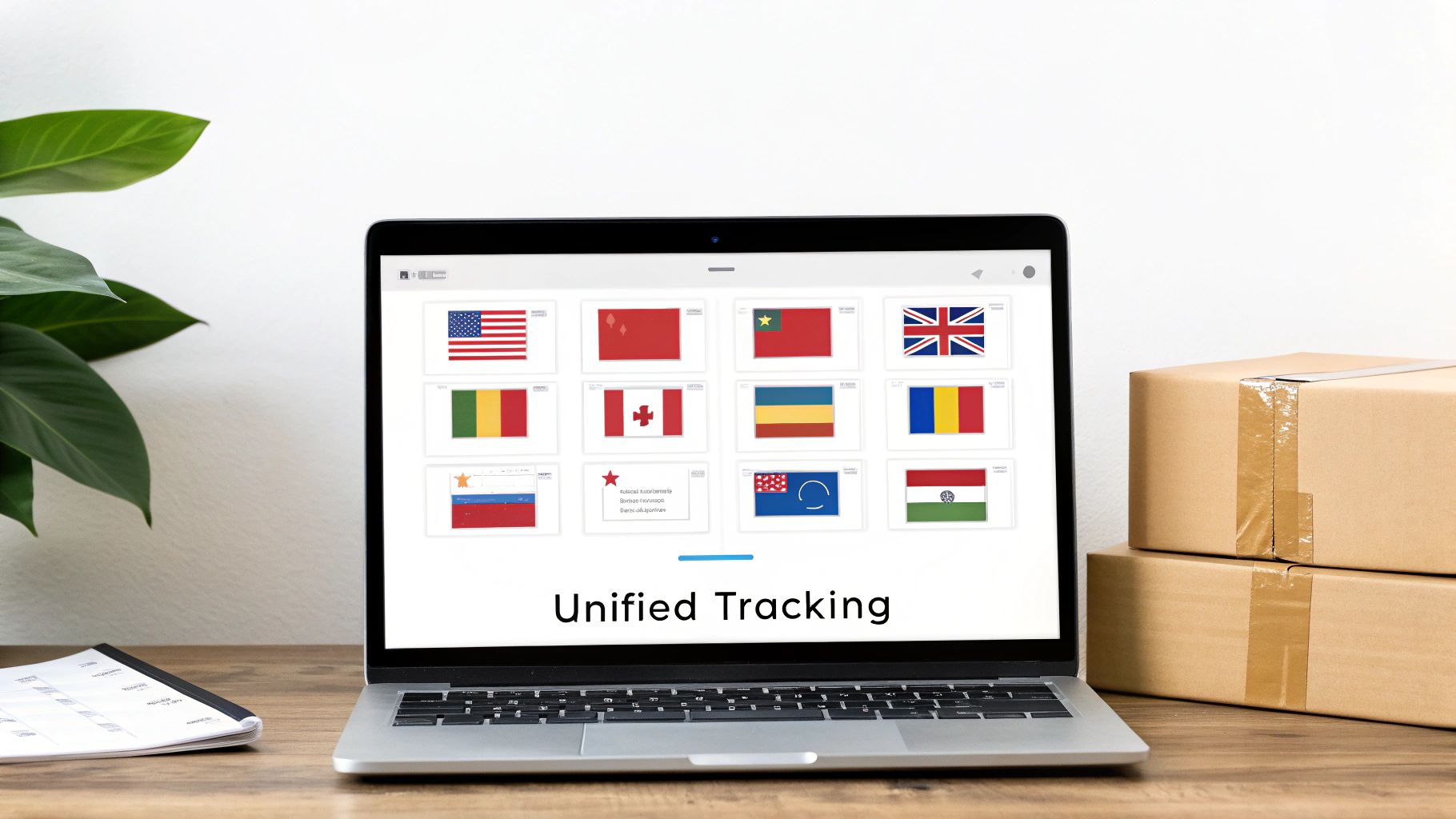
The real magic of a universal tracker isn't some fancy tech—it's simplicity. You get one dashboard, one search bar, for everything. It's a game-changer for anyone who ships regularly, especially sellers trying to keep tabs on multiple customer orders.
Take Instant Parcels, for example. You can drop any tracking number in, and the system is smart enough to know it's a USPS package. It does the work for you, fetching the data and presenting it in a clean, consistent format.
This kind of centralized view cuts out all the noise and repetition of checking different sites. Whether you’re a buyer eagerly awaiting a package or a small business owner making sure shipments arrive on time, bringing all your tracking into one place just saves time and hassle. The goal is to get the answers you need with as few clicks as possible.
What Do These Tracking Statuses Actually Mean?
Tracking a USPS Priority Mail International package can feel a bit like learning a new language. A single, cryptic line of text can leave you wondering if your parcel is moving smoothly or if it’s hit a snag somewhere over the ocean. Let's break down what these common updates really mean so you can stop guessing and feel confident about your shipment's progress.
Think of each scan as a new chapter in your package's story. By understanding the lingo, you can clearly see its path from the sender's hands to its final destination.
The First Leg of the Journey
These are the updates you'll see right after the package is shipped. They happen fast and confirm your item is officially in the mail system.
Pre-Shipment Info Sent to USPS, USPS Awaiting Item: This is the starting gun. It means the sender has printed a shipping label, but a postal worker hasn't scanned the package yet. The delivery clock hasn't officially started.
Accepted at USPS Origin Facility: Great news! This is the first physical scan by USPS. Your package is now in their hands and its journey has truly begun.
Arrived at USPS Regional Facility: Your parcel has reached a major sorting hub. It's being grouped with other international packages heading in the same general direction.
Quick Tip: Don't worry if you see your package bounce between a few "Regional Facilities." This is totally normal. It's just USPS efficiently routing it toward the correct international departure airport.
Handing Off to the World
This is where things can get a little less predictable. The tracking statuses now reflect the package's move from the U.S. postal network to the destination country's system.
A status you'll see often is In Transit to Next Facility. It’s a bit of a catch-all update, but it does mean your package is on the move, whether it's on a truck to the airport or a plane across the ocean. If you want to dig deeper into this common but vague status, you can learn more about what 'in transit' really means on our blog.
The most important scan during this phase is Processed Through Facility at an International Service Center (ISC), usually in a major city like New York, Miami, or Los Angeles. This is your package's last stop on U.S. soil.
To help you translate these messages, here’s a quick guide to the most common statuses you’ll encounter on your package’s international journey.
USPS Priority Mail International Status Meanings
| Tracking Status | What It Really Means | Next Step to Expect |
|---|---|---|
| Processed Through Facility (ISC) | Your package has been sorted at the U.S. international departure point. | Departure from the United States. |
| Departed | It's on a plane heading to the destination country. | Arrival in the destination country. |
| Arrived in [Country] | The package has landed and is waiting to be processed by customs. | It will be handed over to customs officials for inspection. |
| Held in Customs | Your package is being inspected by customs officials. | Release from customs, or a request for more info/payment. |
| Inbound Out of Customs | Good news! Customs has cleared your package. | Handover to the local postal service for final delivery. |
| Out for Delivery | The local postal carrier has your package and will deliver it today. | The package should arrive at its final destination shortly. |
This table covers the major milestones, but the customs phase is where things can get tricky.
Clearing Customs and Final Delivery
Once your package lands, it enters the most unpredictable part of its trip: customs clearance.
The status Held in Customs can be alarming, but it’s often just a standard procedure. Officials are checking the contents and paperwork. Delays here are usually caused by missing documentation or if there are import duties and taxes to be paid by the recipient.
The update you’re really waiting for is Inbound Out of Customs. This means it's been cleared and handed over to the local postal service—like Royal Mail in the UK or Deutsche Post in Germany—for the home stretch.
From this point on, the tracking updates will come from that local carrier. The language might change slightly, but you're on the lookout for a local sorting scan and, finally, the "Out for Delivery" status that means it’s arriving today.
Navigating Customs and Common Delays
Nothing gets your heart racing quite like watching your tracking information and seeing it suddenly grind to a halt. When you’re tracking a USPS Priority Mail International package, the culprit for a sudden standstill is almost always customs. This process is perfectly normal, but it’s also the single biggest wild card in international shipping.
Every single package that crosses a border has to be inspected by that country's customs officials. They’re not just waving it through; they're checking to make sure the contents match the declaration form, that the items are actually allowed into the country, and that all the necessary duties and taxes have been handled. Seeing a status like "Held in Customs" isn't a cause for panic—it just means your package is in the queue. It's when that status doesn't change for days that you might have a problem.
Why Packages Get Stuck at the Border
So, what turns a routine customs check into a week-long headache? It usually boils down to a handful of common issues. Knowing what they are can help you avoid them from the get-go.
Most of the time, the hold-up is due to simple paperwork problems.
- Vague Customs Forms: The sender has to be crystal clear about what's in the box and how much it's worth. Descriptions like "Gift" or "Merchandise" are red flags that will almost certainly trigger a manual inspection.
- Missing Documents: Some items need special forms or licenses to be imported. If that paperwork isn’t included, customs will simply hold the package until the documents are provided.
- Unpaid Duties and Taxes: If the package is worth more than the destination country's tax-free limit, the recipient has to pay import fees. The local postal service is supposed to send a notice about this, but that whole process can add significant delays.
I see this all the time: an online seller tries to do the buyer a favor by undervaluing an item on the customs form to avoid import fees. It might seem helpful, but it often backfires. Customs agents can spot this easily, which leads to much longer delays and even fines. When it comes to customs forms, honesty is always the best strategy.
Beyond paperwork, changes in logistics and shipping costs can ripple through the system. As part of its $40 billion Delivering for America plan, USPS adjusted its prices for 2025, with Priority Mail International (PMI) seeing about a 3.2% increase. Shippers now have to factor in new surcharges, like a $4 fee for parcels between 22 and 30 inches. These structural changes, including the development of new sorting centers, can sometimes create temporary bottlenecks. You can read the full breakdown in the official USPS report on 2025 competitive price recommendations.
And then there's everything else that can go wrong. Things like severe weather, a postal strike in the destination country, or even a national holiday can shut down sorting facilities and transit routes with zero warning. These delays are completely out of USPS's hands, but you'll usually see them pop up in the tracking history once things get moving again.
Bring All Your Tracking Into One Place
Let's be honest: juggling shipments from multiple carriers is a pain. You’ve got a USPS Priority Mail International package going one way, a FedEx box coming from another state, and maybe a DHL Express parcel making its way from overseas. That usually means having three different browser tabs open, trying to remember which tracking number goes where, and making sense of three different sets of status updates.
It gets messy, fast. This is exactly why a universal tracking platform can be such a game-changer. Instead of bouncing between different websites, you can pull everything together into one clean, simple dashboard.
Why a Single Dashboard Makes Sense
A centralized tracker like Instant Parcels is built to cut through that clutter. You just paste any tracking number into one search bar, and the system figures out the carrier on its own—whether it’s USPS, UPS, or some smaller regional courier—and shows you the latest updates.
Think about the time that saves. No more bookmarking a half-dozen carrier pages or guessing which site to use for that one odd tracking number. For anyone running a small business, this isn't just a nice-to-have; it’s a real competitive edge.
The real win with a unified dashboard is the clarity it gives you. When all your shipment info is in one spot, you can see potential delays sooner, give your customers a heads-up, and spend less time chasing packages and more time actually running your business.
This streamlined approach is more important than ever. In fiscal year 2023, USPS International services brought in $1.265 billion in revenue. While that was a dip from the year before, the total shipping and packages segment still handled nearly 7 billion items. Tools that bring all that tracking data together are crucial for managing this huge flow of goods, turning complex international shipping routes into simple status checks. You can dig into the numbers yourself and find more insights on the official USPS newsroom release.
A Better Experience for Your Customers
If you sell anything online, you know the customer experience doesn't end at checkout. The "post-purchase" phase is where you build loyalty, and tracking is a huge part of that. Sending your customers a single, professional tracking link that works for any carrier is a simple way to make their life easier.
This small touch does two big things for you:
- It cuts down on support questions. Customers who can easily see where their package is are much less likely to email you asking, "Where is my order?"
- It builds trust in your brand. A smooth tracking experience proves you’re on top of things, even after the package has left your hands.
You’re no longer just managing shipments; you’re managing the entire customer journey. You’re providing a consistent, branded experience from the moment they buy to the moment the box arrives at their door. It’s just a smarter way to handle logistics. To take it a step further, see our guide on finding the best package tracking app that fits your needs.
Got Questions About International Tracking? We've Got Answers
Shipping a package across borders can feel like sending it into a black hole sometimes. Even if you’ve done everything right, a stalled tracking update can cause a bit of panic. It’s a completely normal reaction.
To help put your mind at ease, let’s walk through some of the most common questions and snags people run into when tracking a USPS Priority Mail International package.
These are the real-world situations that tend to cause the most confusion. Getting clear, practical answers can make the whole process a lot less stressful.
Why Has My USPS International Tracking Gone Silent for Days?
This is, without a doubt, the number one cause for concern I hear about. But more often than not, it’s nothing to worry about. A gap in tracking updates is usually just part of the process.
This quiet period frequently happens right after the package leaves the U.S. and is literally in transit—flying over an ocean or being transported between countries. There are simply no scanning facilities in the air or on the open sea.
Another common reason for a pause is the handover to the local postal service. Some countries' postal systems just don't scan packages as obsessively as USPS does. You might see a radio silence until it hits a major sorting hub or the final delivery office. Customs is another classic spot for a temporary freeze while your package is being inspected.
Your package is almost always still moving, even when the tracking page is quiet. Think of it like a long road trip—you only get updates at major checkpoints, not every single mile along the way.
Can I Still Track My Package After It Leaves the US?
Absolutely. In fact, you should. Your original USPS tracking number is designed to work for the entire journey, from your door to its final destination.
Once the package lands in the destination country, their local postal service takes over and uses that very same number to log new scans as it travels through their network.
What can change is the level of detail you see. Some national postal services provide fantastic, real-time updates that feed right back into the USPS system. Others? Not so much. Their scans might be less frequent or detailed. This is where a universal tool like Instant Parcels really shines, by pulling data from both carriers to give you a more complete picture of what's going on.
What Should I Do If My International Package Seems Lost?
Okay, so what happens when a normal delay starts to feel... not so normal? If your package is well past its 6-10 business day delivery window and the tracking hasn't budged for more than two weeks, it's time to take action. Don't just sit back and hope for the best.
Here’s the game plan:
- If you're the sender: You’re the one who holds the power here. You need to be the one to contact USPS directly through their international inquiry line or online form to start an official investigation.
- If you're the recipient: Your first move is to contact the sender. Let them know what's happening so they can file the inquiry with USPS. In the eyes of the postal service, the sender is their customer.
When you (or the sender) file the claim, be sure to have the tracking number, both the sender and recipient addresses, and a description of the contents handy. This kicks off a formal search process where USPS communicates with the destination country's postal authority to try and locate your package.