
A Complete Guide to Cross Country Freight Tracking
"Where's my package?"
It's the question that drives your business, defines your customer service, and keeps your operations team on its toes. When we talk about cross country freight tracking, we're talking about the lifeline of your supply chain—the real-time system for watching goods move across long distances, whether by truck, train, or plane. It’s what separates a smooth delivery from a logistical nightmare.
Why Cross Country Freight Tracking Matters More Than Ever
Today's supply chains are more tangled than ever before. Think about it: a single order can start in a factory overseas, get loaded onto a container ship, ride the rails across a continent, and finally land on a local delivery truck. Each handoff is a potential point of failure.
Without a central hub to watch this entire journey unfold, you're stuck in the dark. You're juggling a dozen carrier websites, trying to make sense of cryptic status updates, and burning precious time just trying to get a straight answer.
And this complexity isn't going away. Recent data shows that global trade is booming, with the average shipment now traveling a record 5,000 kilometers. This confirms what many of us in the industry see every day: supply chains are getting longer, not shorter. You can dig into the full global trade expansion findings from DHL to see just how interconnected we’ve become.
The Pain Points of Fragmented Tracking
When your tracking is all over the place, the problems aren't just theoretical—they hit your bottom line and your reputation, hard.
Here’s what that looks like in the real world:
- No Single Source of Truth: Your team is constantly bouncing between FedEx, USPS, and a handful of LTL freight portals, trying to piece together a shipment's story. It's a massive time-waster and a recipe for mistakes.
- Reactive, Not Proactive: You can't get ahead of problems. By the time you find out about a customs hold or a weather delay, it’s already impacting your customer. You’re always playing catch-up.
- A Terrible Customer Experience: A customer calls for an update, and you can't give them a confident answer. That silence or uncertainty kills trust, especially when you can't even confirm a delivery with a clear proof of delivery.
A unified platform like Instant Parcels is designed to cut through that chaos by bringing hundreds of carriers into a single, clean interface.
Instead of manual lookups and guesswork, you get instant clarity on where any shipment is, no matter which carrier has it. This isn't just a nice-to-have; it's the modern solution to the headaches of global logistics.
How to Gain Full Visibility on Any Shipment
Getting a clear view of your shipment’s journey is about more than just finding a tracking number. It’s about piecing together the entire story, from the moment it leaves the warehouse to the second it arrives at the destination. Let's walk through how to turn that complicated process into something you can manage with confidence.
The first thing you need is the tracking number. This unique code is your golden ticket, but sometimes it feels like it's been hidden on purpose.
You’ll usually find it in one of three places:
- Shipping Confirmation Emails: This is the most common spot. It's that long string of numbers and letters, often hyperlinked, in the email confirming your order has been shipped.
- E-commerce or Marketplace Dashboards: If you bought something from a site like Amazon or eBay, your tracking number will be right there in your order history.
- The Physical Shipping Label: For anyone sending a package, the tracking number is printed right on the label, usually sitting just below a barcode.
Instantly Identify the Carrier
Once you've got the number, the next question is, who has the package? Is it with FedEx, USPS, or some regional LTL freight carrier you've never heard of? Hopping from one carrier website to another, pasting the number in, is a huge waste of time.
This is where a universal tracking tool comes into play. With a platform like Instant Parcels, you just paste the number into a single search bar. That's it. The system instantly recognizes the format, identifies the carrier, and pulls up the latest tracking data—no guesswork needed. This simple step can save your team hours every week and provide the real-time data insights needed to make smart decisions.
Visualizing a Multimodal Journey
To really see how powerful consolidated tracking can be, let’s look at a real-world example. Imagine a pallet of electronics manufactured in Shenzhen, China, that needs to get to a customer in Ohio.
This one order will almost certainly use multiple types of transport and several different carriers, each with its own tracking system.
- First Leg (Truck): It all starts with a local truck moving the pallet from the factory to the Port of Shenzhen.
- Second Leg (Ocean Freight): At the port, it's loaded onto a massive container ship for the long voyage across the Pacific to the Port of Los Angeles.
- Third Leg (Rail): Once it clears customs in LA, the container gets moved onto a freight train for the cross-country haul to a rail hub near Ohio.
- Final Mile (Truck): Finally, the pallet is broken down, and the individual package is handed off to a domestic carrier like UPS for that final delivery.
Without a unified system, you’d be stuck manually checking with the Chinese trucker, the ocean line, the rail company, and UPS. It's a logistical nightmare just waiting to happen. The infographic below perfectly captures how this fragmented journey often descends into chaos.
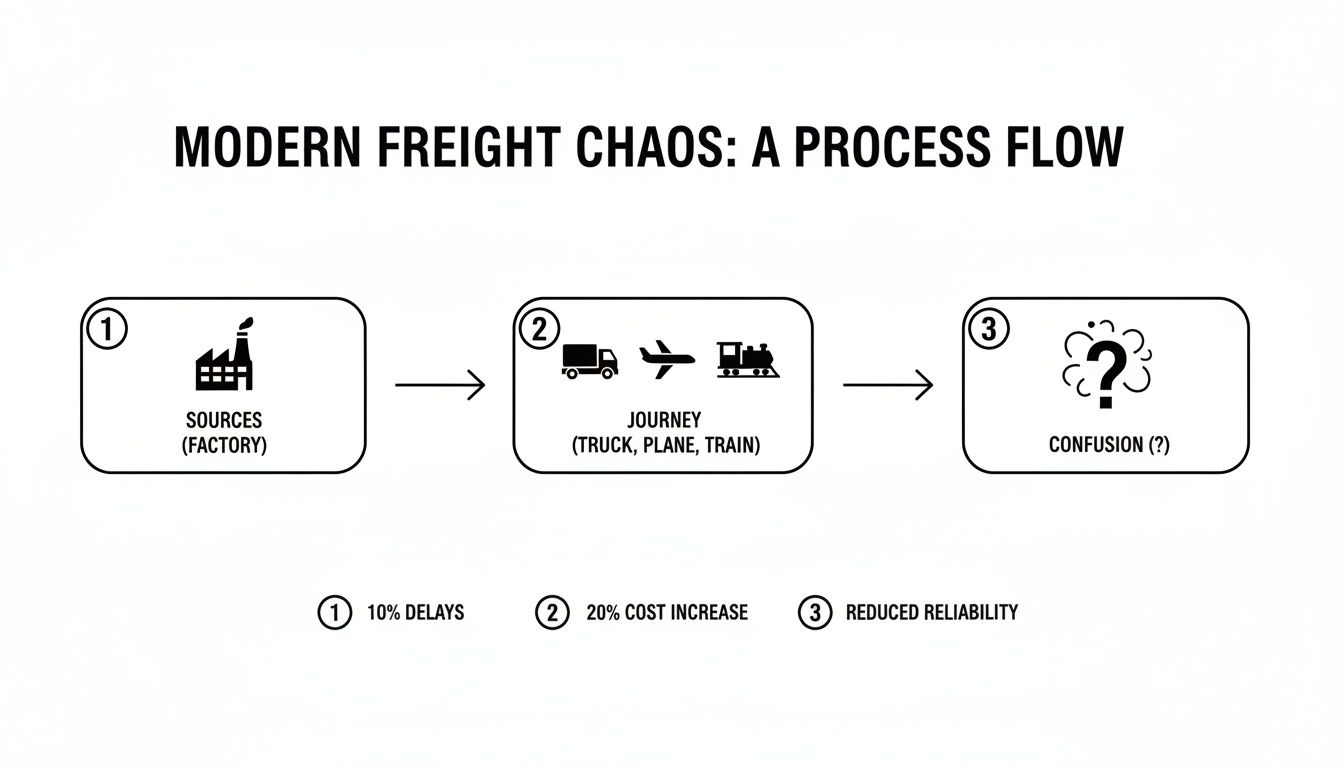
This kind of process highlights how every handoff is a potential point of failure or an information black hole. Having a single source of truth isn't just nice—it's essential.
A consolidated tracking history merges all these separate updates into one clean timeline. Instead of seeing four different journeys, you see one continuous story, from "Label Created" in Shenzhen to "Delivered" in Ohio.
This unified view is a total game-changer. It gives you the full picture, helps you anticipate delays at transfer points, and lets you give your customers one simple tracking link. By centralizing this information, you can transform chaotic, multimodal shipping into a predictable and transparent operation.
Decoding Tracking Statuses and Navigating Delays
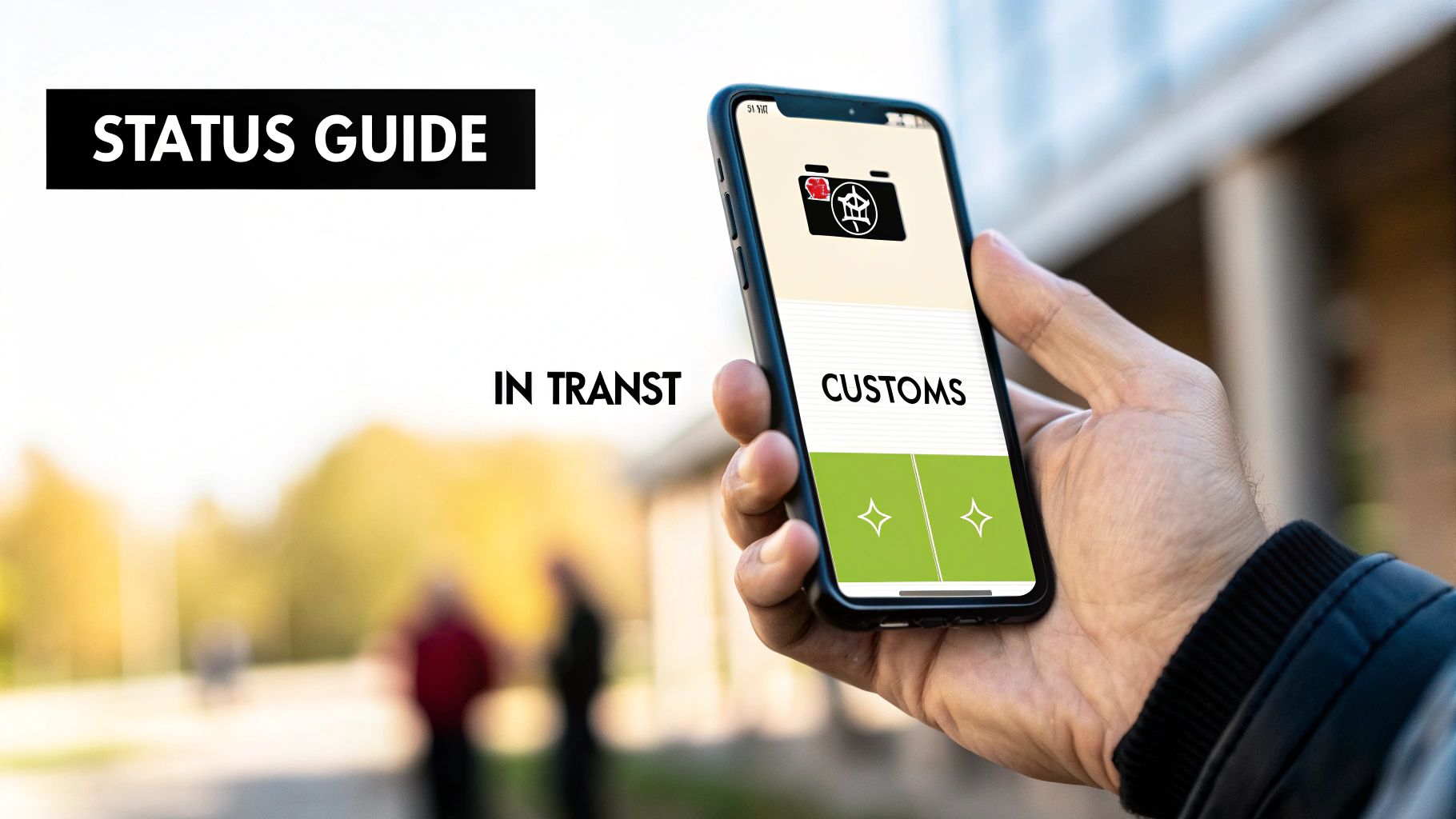
A shipment's tracking history tells a story, but let's be honest, carrier jargon can be incredibly cryptic. Phrases like 'In Transit' or 'Exception' can mean a dozen different things, creating a frustrating information gap for both you and your customers. Getting a handle on this language is the key to managing expectations and tackling problems before they blow up.
It’s the difference between blindly waiting for a package to show up and making informed, proactive decisions about your cross-country freight.
Unpacking the Language of Logistics
Most carriers rely on a shared vocabulary to mark the key milestones of a shipment’s journey. While the exact wording might differ slightly from one provider to the next, the core meanings are pretty consistent.
Here’s a quick-reference table to translate the most common statuses you'll encounter.
Common Cross Country Freight Tracking Statuses Explained
| Tracking Status | What It Really Means | Recommended Action (If Any) |
|---|---|---|
| Label Created / Pre-Shipment | The shipping label exists, but the carrier doesn't have the package yet. It's waiting for pickup. | No action needed. This is the starting point. |
| In Transit / En Route | The package is officially on the move between sorting facilities—on a truck, train, or plane. | Monitor for progress. This covers the long-haul portion of the trip. |
| Arrived at / Departed Facility | Your package has been scanned at a specific sorting hub. A series of these shows steady progress. | No action needed. This is a positive sign that things are moving as planned. |
| Out for Delivery | The one everyone's waiting for! The package is on the local truck and scheduled to arrive today. | Inform the recipient so they can be ready to receive it. |
| Shipment Exception | An unexpected event has occurred, potentially causing a delay. It's a broad term. | Investigate immediately. Check the detailed tracking for more context. |
| Delivery Attempted | The driver tried to deliver but couldn't (e.g., no one was home, business was closed). | Contact the recipient to coordinate. The carrier will try again or hold the package. |
Think of these statuses as a breadcrumb trail. Most of the time, the trail is straightforward, but when it's not, you need to know what to look for.
When Your Shipment Hits a Snag
Not every tracking update brings good news. Certain statuses are red flags, warning you that a delay is likely. Recognizing these signals is crucial for getting out ahead of customer support issues.
A Shipment Exception is the ultimate catch-all term. It means something unexpected has interrupted the normal delivery flow—anything from a damaged label or a weather delay to a customs hold.
Seeing an "exception" pop up doesn't automatically spell disaster, but it absolutely means you need to dig deeper. The carrier’s detailed tracking page usually offers more context. For a complete breakdown, you can learn more about shipment exceptions and how to resolve them in our dedicated guide.
Another common one is Delivery Attempted. This update simply means the driver tried to complete the delivery but couldn't. Maybe no one was there to sign, or they couldn't access the location. Typically, they'll either try again the next business day or hold the package at a nearby facility for pickup.
Proactively Troubleshooting Common Holdups
Knowing what a status means is one thing; knowing what to do about it is the real challenge. Delays are just part of the logistics game, especially with the sheer volume of goods moving across borders every day.
To put it in perspective, U.S. truck shipments with Canada and Mexico soared to a record $144.8 billion in March 2025 alone—a 35% jump from 2019 levels. Trucks now haul over 60% of all land border trade. With numbers like that, even tiny issues can create major backlogs. You can dive into more data on this freight boom from the Bureau of Transportation Statistics.
When you run into a holdup, here are some practical next steps:
- Customs Delays: If a package gets stuck in customs, the culprit is often missing paperwork (like a commercial invoice) or an incorrect value declaration. Your first call should be to the carrier to find out exactly what documentation they need.
- Weather-Related Holds: There's not much you can do when a blizzard shuts down highways or grounds flights. The most important thing here is communication. Let your customer know about the delay and give them a new ETA as soon as you have one.
- Address Issues: A simple typo in an address is a surprisingly frequent cause of exceptions. If you see a delivery issue, double-check the order details and get in touch with the recipient to confirm everything. You can then pass the correct information to the carrier to get things moving again.
This is where a consolidated tracking dashboard becomes so valuable. Instead of juggling ten different carrier websites, you can see all your exceptions in one place. It lets your team focus on solving problems, not just finding them.
Weaving Tracking into Your Business Workflow
Solid cross country freight tracking is more than just plotting a package on a map. It’s about making that location data a core part of how your business operates. When you fold real-time tracking information into your daily routines, you stop reacting to problems and start proactively managing the customer experience. This simple shift saves an incredible amount of time, builds lasting trust, and gets your team out of the weeds.
Instead of seeing tracking as a final, disconnected step, think of it as the central hub for your entire post-purchase journey. Every single status update is a piece of intel that can guide your customer service, help manage inventory, and keep your whole team on the same page.
Get a Bird's-Eye View with a Tracking Dashboard
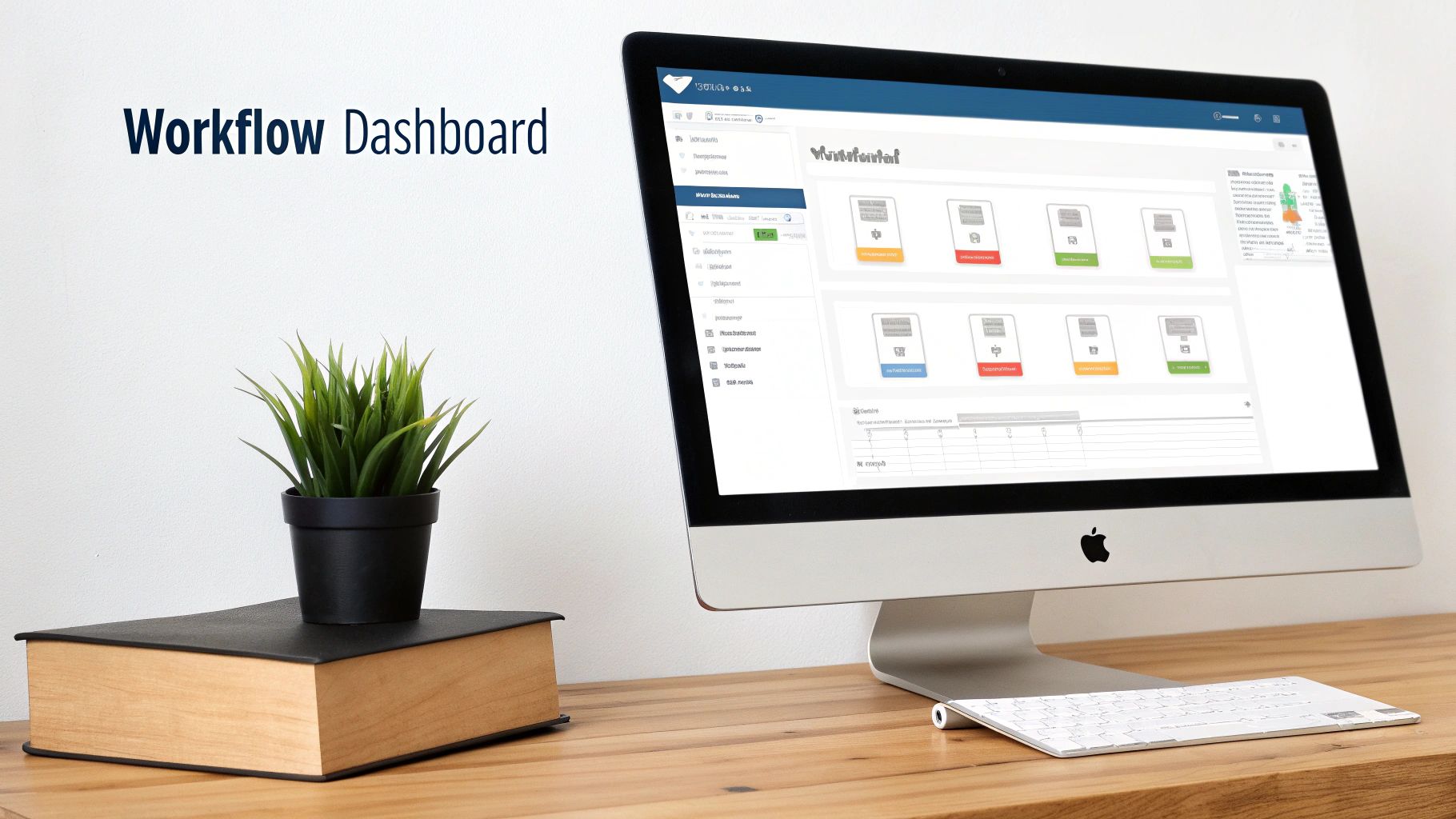
For anyone handling more than a handful of shipments, toggling between different carrier websites is a productivity killer. This is where a unified tracking dashboard, like the one from Instant Parcels, completely changes the game. It pulls all your shipments—no matter the carrier—into one clean, scannable screen.
From this single command center, your team can see what needs attention at a glance. You know which packages are cruising along, which are hitting snags, and which need your help right now.
Imagine a typical day for an e-commerce support team. With a dashboard, their workflow becomes instantly smarter:
- Filter by Status: They can pull up every shipment with an "Exception" status in two clicks, letting them jump on potential issues before a customer even knows there's a problem.
- Monitor VIP Orders: High-value or time-sensitive deliveries can be watched closely without the hassle of checking each one manually.
- Predict Customer Questions: If a package hasn't moved from a sorting facility in a day or two, the team can proactively reach out to the customer with an update, turning a potential complaint into a positive interaction.
This is what "managing by exception" really means. Your team isn't buried in routine checks; they’re focused on solving the real problems that matter.
Slash WISMO Calls with Shareable Tracking Links
Let’s be honest: "Where Is My Order?" (WISMO) tickets are one of the biggest time-sucks for any support team. They're simple questions, but they add up, pulling your team away from more complex issues. The best way to combat this is to arm your customers with clear, easy-to-access information from day one.
A one-click, shareable tracking link is your most powerful tool here. Instead of just sending a raw tracking number and making the customer figure out which website to use, you give them a single, branded link that always works.
Businesses that provide a simple, self-service tracking link can cut down on WISMO inquiries by as much as 40%. That’s a massive win for the customer and a huge time-saver for your support staff.
This small tweak to your workflow makes a huge difference. When customers can follow their package's journey on a clean, intuitive page, their confidence in your brand skyrockets. They feel informed and in control—and that feeling is the bedrock of a great post-purchase experience.
Automate Your Updates and Set Clear Expectations
But integration doesn't stop with a link. The real magic happens when you use shipment statuses to trigger automated communications, keeping your customers in the loop at every key moment. Today, this level of transparency isn't a bonus; it's an expectation.
Here are a few high-impact automations you can set up:
- "Out for Delivery" Heads-Up: An automated email or SMS when a package's status flips to "Out for Delivery" is a game-changer. It drastically cuts down on missed delivery attempts.
- Proactive Delay Alerts: If a shipment is flagged with an "Exception," you can trigger a message that says, "Hey, we've spotted a small delay, and we're on it." This reassures the customer that you're watching out for them.
- "Delivered" Confirmation: Close the loop with a final notification confirming the delivery. This gives the customer peace of mind and opens the door for you to ask for a review or recommend a related product.
By building these automated touchpoints into your process, you create a communication flow that answers questions before they’re even asked. This is how you turn the basic logistics of cross country freight tracking into a powerful engine for building customer loyalty, one successful delivery at a time.
Advanced Tracking Strategies for Logistics Professionals
For those of us deep in the logistics game—coordinators, high-volume shippers, and supply chain managers—basic cross country freight tracking just doesn't cut it anymore. Simply knowing where a truck is on a map isn't enough to stay ahead. The real advantage comes from turning all that raw tracking data into actionable intelligence. This is how you start making smarter carrier choices, protecting high-value goods, and seeing supply chain hiccups on the horizon before they become full-blown crises.
Mastering logistics is all about seeing the big picture. It means digging into your own historical data to spot trends, setting up your own informal checks at tricky transit points, and really understanding how things like port congestion or holiday rushes can throw a wrench in your entire network.
From Data Points to Performance Metrics
Your past shipment data is a goldmine, seriously. Every completed delivery leaves a breadcrumb trail of performance insights. This trail can tell you which carriers are actually living up to their promises and which ones are just good at sales pitches. Instead of just picking a carrier based on their advertised transit times, you can use your own hard data to make a much smarter call.
The best way to start is by looking at performance on your most common, high-traffic routes.
- On-Time Performance: For each carrier on a specific lane, like Los Angeles to Dallas, what percentage of your shipments actually arrive on time? It's not uncommon to discover that Carrier A, while 5% cheaper, has a delivery-on-time rate that's 15% lower than Carrier B. That's a trade-off you need to know about.
- Dwell Time Analysis: How long is your freight just sitting around at a sorting hub or a cross-dock facility? Excessive dwell time is a silent killer of efficiency. It's a huge red flag that points to bottlenecks and operational problems within a carrier's system.
- Exception Rate: Keep a running tally of how often a carrier's shipments run into an "exception." If one carrier consistently has a high rate, it could signal issues with their handling, routing logic, or even recurring problems at specific customs offices.
When you start analyzing your data like this, tracking stops being a reactive, "where's my stuff?" tool and becomes a proactive way to manage your vendors. Logistics pros also often pair this with complementary tools, like sales route planning software, to fine-tune final-mile deliveries and boost overall operational visibility.
Proactive Monitoring for High-Value Shipments
When you’re moving something irreplaceable or incredibly valuable, you can't afford to just sit back and wait for an alert. You need to be more hands-on. A great tactic is to set up your own informal checkpoints at known logistical choke points. This adds a crucial layer of oversight.
For a mission-critical shipment, map out the key handoff points: customs clearance, the switch from a container ship to a railcar, or the handoff to the final-mile delivery partner. Then, make a point to proactively check in—either with your carrier contact or on your tracking dashboard—to confirm the shipment has cleared each of those hurdles smoothly.
This approach is incredibly valuable. For example, getting confirmation that your container has cleared customs and is officially on a train heading inland gives you a two-day head start. If a trucking issue pops up down the line, you're already ahead of the game and can work on a solution before it snowballs into a major delay.
Tracking Macro Trends to Protect Your Supply Chain
Finally, getting truly strategic with tracking means looking beyond your individual shipments. You need to keep an eye on the broader economic and logistical trends that impact your entire operation. The global freight trucking market—the backbone of nearly all cross-country shipping—was valued at USD 2.7 trillion in 2025 and is expected to hit USD 4.1 trillion by 2035. Long-haul routes are the biggest piece of that pie, making up 57.8% of the revenue, largely because technology has made moving freight in bulk more reliable than ever. You can dig deeper into these global freight market trends and projections.
By keeping up with industry news and noticing patterns in your own tracking data, you can see the ripple effects of big events like port strikes, severe weather, or seasonal shipping peaks. This kind of foresight lets you reroute shipments, adjust inventory, or give your customers a heads-up about potential delays long before your competitors even know there's a problem. It’s the difference between just watching a dot on a map and truly commanding your supply chain.
Common Questions About Cross-Country Freight Tracking
Even with the best tools, you're bound to run into questions when managing freight. The world of cross-country freight tracking is full of quirks and the occasional hiccup. Here are some quick, no-nonsense answers to the questions we hear most often from shippers and support teams.
Think of this as your go-to troubleshooting guide for getting shipments back on track and managing everyone's expectations.
What Should I Do If My Tracking Number Isn't Working?
It's a frustratingly common problem: you plug in a tracking number, and it comes back with an error or just... nothing. Before you hit the panic button, run through a quick mental checklist.
First, just double-check for typos. It's shockingly easy to mistake a "0" for an "O" or accidentally skip a digit when you're copying and pasting all day.
If the number is definitely correct, the issue is probably timing. Tracking numbers are often generated the second a shipping label is printed, but they won't go "live" until a carrier physically scans the package. Give it up to 24 hours for the system to catch up.
If you've waited a full day and the number is still dead in the water, it's time to reach out to the shipper or the carrier directly. They can confirm the package was actually picked up and verify the tracking info on their end.
Why Does My Package Seem Stuck in One Location?
Seeing a shipment sit at the same sorting facility for days can be nerve-wracking, but it's not always a sign of trouble. This happens all the time in cross-country freight tracking, especially with coast-to-coast hauls.
A few things could be happening behind the scenes:
- Consolidation: Your package might be part of an LTL (less-than-truckload) shipment. It's likely waiting at a hub until there's a full truckload of goods headed in the same direction. It’s a standard cost-saving measure.
- Customs Clearance: If your freight is crossing a border, it can easily spend a few days at a customs facility waiting for inspection and paperwork to clear.
- Peak Season Volume: During the holidays or other busy periods, sorting centers get swamped. Your package might be physically at the facility, but it's sitting in a long queue waiting to be processed and scanned.
As a rule of thumb, if a package hasn't budged for more than 72 hours and there's no obvious reason (like a customs hold status), that's your cue to contact the carrier for an update.
How Accurate Is the Estimated Delivery Date?
The key word here is estimated. Carriers use complex algorithms that look at historical data for that route, current network traffic, and other factors to predict an arrival date. And honestly, they’re usually pretty accurate.
But they are never a guarantee.
Real-world problems can throw a wrench in the works. A freak snowstorm closing a mountain pass, a sudden highway closure, or a mechanical breakdown can all cause delays. The tracking history is your best source of truth. The moment you see a status like "Exception" or "Weather Delay," you can assume the original estimate is off the table.
Can I Reroute a Package That’s Already in Transit?
The short answer is: maybe, but it's not easy or cheap.
For smaller parcels, carriers like UPS and FedEx have services (like UPS My Choice or FedEx Delivery Manager) that give you some control, like holding a package or changing the address within the same town.
Rerouting a cross-country freight shipment from, say, California to New York when it's already in Nebraska? That's a major logistical challenge. It means intercepting the shipment at a hub, generating a new label, and re-billing the whole thing. This service always comes with a hefty fee and will tack on several days to the transit time. If you need to make a change, contact the carrier immediately to find out if it's even possible.